

Forget the Instagrammable facade for a second. We’re not here to talk about pretty wallpaper.
We’re diving into the silent, powerful language of space—the restaurant atmosphere design. It’s like the unsung co-writer of your meal’s story.
You walk in. Before you even take a bite, the room tells you a story. Is it a fast-paced comedy or a slow-burn drama? The truth is, the environment is the experience. It’s the difference between just eating and creating a memory.
This isn’t just decoration. It’s a deliberate, sensory framework. Lighting, sound, and décor aren’t background noise. They’re psychological primers, setting your expectations before the menu arrives.
Understanding what makes a good restaurant atmosphere is the first step to mastering this craft. Let’s pull back the curtain on the world your guests really walk into.
Emotional impact of space
When you walk into a restaurant, you’re part of a secret test. The restaurant ambiance shapes your mood. A simple change in decor can make you sit up straight or relax.
This is the hidden art of dining design. A great space can turn a regular night into a special event. It affects you from the moment you enter. The first few seconds are key, setting the mood for the night.

Colors play a big role in this magic. Warm colors like reds and oranges make you hungry and talkative. Cool colors like blues and greens calm you down, perfect for places where food is the main attraction.
The aim is to make you feel something special. A cozy trattoria feels like a warm hug. A sleek sushi bar builds excitement. This emotional connection is what keeps customers coming back.
The real value of a space is how it makes you feel. It’s not just about the food, but the experience. So, when you sit back or focus on your meal, remember: the space is talking to you, and you’re listening.
Lighting and acoustics
Lighting in a restaurant is more than just light. It’s like a movie set for your meal. The chef is the director, the food is the star, and the lighting designer is like the cinematographer.
Warm lighting makes your food look like a work of art. It makes a seared ribeye look rich and alive. But cool lighting can make it look pale and unappetizing.
Accent lighting adds drama to your meal. A spotlight on a centerpiece is not by accident. It guides your eye and makes your table feel special.
Sound is just as important as light. Your playlist sets the pace of your meal. Fast music can hurry you along, while slow music makes you relax.
Good acoustics are key to a great dining experience. They let you hear your date clearly without shouting. Bad acoustics can make it hard to talk and feel uncomfortable.
Light and sound work together to create a memorable meal. They make the experience feel special and not just a chance event. For more on this, check out our analysis on the role of lighting and acoustics in restaurant.
Next time you’re out, notice the lighting and sound. Is it making your meal look good? Can you hear your friends easily? Paying attention to these details can make your dining experience unforgettable.
Flow from entry to table
Think of the best restaurant ambiance as a choreographed dance. It’s not just walking to your table. It’s a journey through a story, with every step adding to the rhythm.
A bad layout is like a traffic jam. You’re pushed by servers, and your conversation is shared with others. It’s all about the friction, not the flow.
A great layout, on the other hand, is like a smooth waltz. It balances intimacy and energy perfectly. You feel private yet connected to the room’s energy. It’s a science of space.
Experts say it’s about comfort, privacy, and service. Tables are placed to create inviting sightlines and efficient service. A smart strategic entryway sets the mood, but the real test is the journey to your seat.
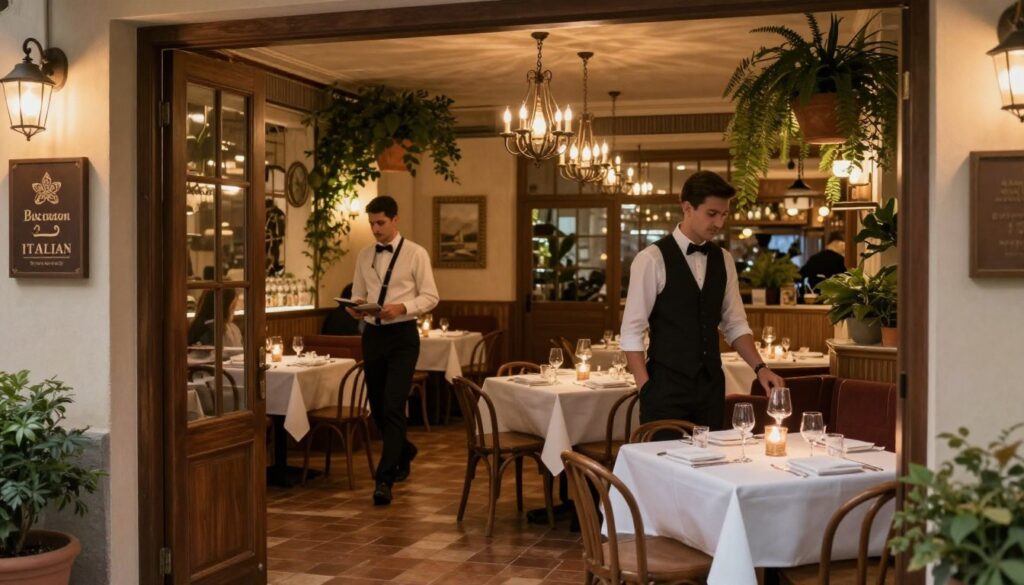
Tavernetta Vail’s redesign is a masterclass in this. It doesn’t have a dining room; it has intentional experiences, or “zones.” Each zone meets different guest needs, showing ambiance is a multi-sensory experience.
| Layout Zone | Designed Experience | Key Ambiance Feature |
|---|---|---|
| Cozy Booths | Privacy & Intimate Conversation | High backs, secluded positioning, softer lighting |
| Convivial Table Groupings | Social Celebration & Energy | Central location, open sightlines to kitchen/bar, louder acoustics |
| The Chef’s Table | Culinary Theater & Exclusivity | Proximity to action, interaction with chefs, a “hidden gem” feel |
| Aperol Spritz Bar Window | Whimsical Moment & Social Spark | A deliberate, playful punctuation in the journey; encourages impromptu interaction |
See the genius? The restaurant ambiance changes as you move. You’re not stuck in one mood all night. You get to choose your experience. That bar window is a moment of surprise, like a witty aside.
This flow makes service better, too. Clear paths mean your water glass is refilled smoothly. The drama of culinary presentation arrives at your table perfectly, not cooled by obstacles.
So, next time you’re in a great restaurant, notice your journey. Feel the space between tables. See how you’re shown to your seat. It’s not just logistics. It’s the start of your evening’s story, written in floor plans and sightlines. True ambiance is felt in motion.
How atmosphere elevates cuisine
Think about the last time a meal truly transported you. It wasn’t just the food. The right dining atmosphere acts as a time machine, a mood ring, a flavor enhancer all in one. That plate of pasta? In a sterile room, it’s carbs. In a space humming with the warmth of a Tuscan farmhouse, it’s a memory.
This is where restaurant atmosphere design graduates from decoration to destiny. A rustic Italian trattoria and a sleek Tokyo sushi bar tell different stories. Their restaurant ambiance isn’t random. It’s the first course, a visual and spatial prologue to the culinary narrative on your plate.
Consider Tavernetta Vail. Their menu promised “La Dolce Vita” – the sweet life. The design delivered Milanese elegance. Italian marble bartops became conversation pieces. White oak warmed the room. This wasn’t theme-park Italy. It was a reimagined permanence, where every texture whispered “joyous lifestyle.”
When cuisine and space sing the same song, magic happens. The meal is no longer consumed. It’s felt. The atmosphere, in its final act, doesn’t just frame the food. It makes the wine taste richer, the bread crustier, the entire experience utterly, deliciously unforgettable.