

In today’s Instagram world, your dish must look as good as it tastes. This is more than just a rule; it’s a must. Watching Top Chef taught me that plating is not just for looks. It’s the first step to a great meal.
They say you eat with your eyes first. This is never truer than with plating. Imagine your plate as a canvas, but instead of paint, you use truffle oil and Parmigiano-Reggiano.
The Italians have known this for ages. They see presentation as a sign of respect for food. From simple antipasti to fancy Michelin-star dishes, Italian plating shows that every part has its place.
Plating is not just about food; it’s about creating a feast for the eyes. The right Artful Plating Techniques turn simple meals into unforgettable experiences. It adds a new layer of joy that touches all your senses before you even take a bite.
Techniques Used by De Novo Chefs
Welcome to culinary architecture school, where your plate becomes a skyscraper. Every ingredient gets its own penthouse view. Modern chefs aren’t just cooking—they’re conducting edible physics experiments.
First, the canvas. Your plate choice matters more than your dating app profile picture. White porcelain? Classic. Dark slate? Dramatic. Square plate? You’re either innovative or trying too hard—the food world’s equivalent of wearing a fedora.
Then comes the architecture. Building height with risotto foundations and protein skyscrapers creates dimension. This makes your dish pop. The rule of odds? Three meatballs always look more intentional than four—it’s the Pythagorean theorem of plating.
Color and contrast work like a Wes Anderson film palette. That bright carrot puree isn’t just flavor—it’s visual jazz against dark proteins. Texture? That crunch isn’t just auditory pleasure; it’s visual contrast that makes ingredients sing.
The real magic happens when you realize negative space isn’t emptiness—it’s breathing room for your culinary masterpiece to shine. Clean edges and minimalist approaches create impact that crowded plates can’t achieve.
Balance becomes your new best friend. Hot and cold. Crispy and soft. Sweet and savory. It’s not just eating—it’s an experience that engages all senses before the first bite even happens.
These artful plating techniques transform simple ingredients into memorable moments. The best food presentation makes you pause and appreciate before you taste. Because sometimes, you really do eat with your eyes first.
Dish-by-Dish Gallery
Our dish-by-dish showcase shows how Italian dishes become stunning visuals. It’s like a private tour at the culinary world’s Louvre. Every dish gets its own special moment.
Natural light is key here. Flash photography can ruin food’s beauty, like a tourist ordering steak wrong in Florence. The right light brings out texture, color, and depth that fake light can’t match.
Spaghetti carbonara gets a makeover. It’s no longer a messy dish but elegant swirls that impress. Artful Plating Techniques turn guanciale into golden confetti and pepper into a delicate halo.
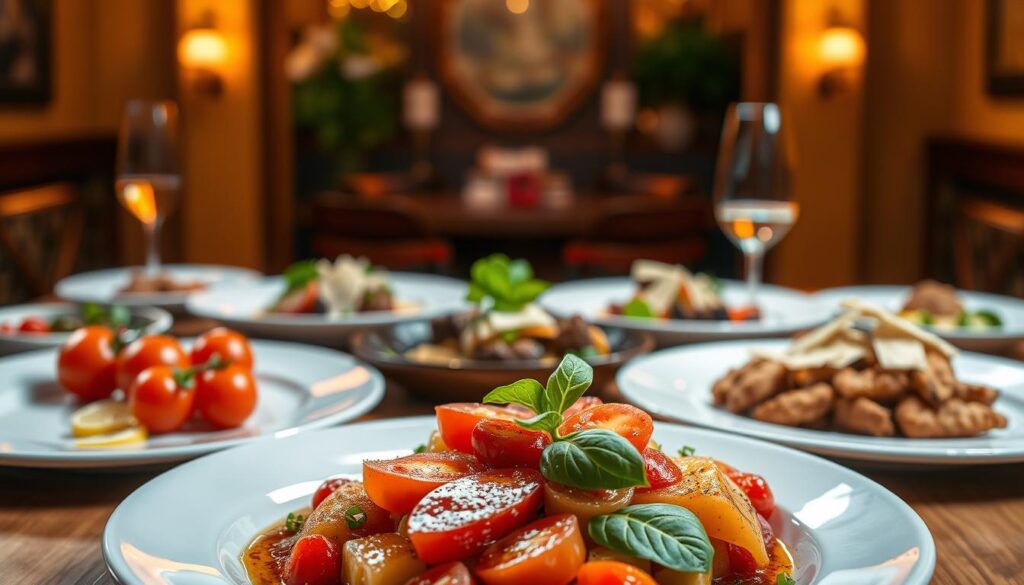
Risotto gets a new look too. It’s no longer a dull puddle but a textured landscape. Each grain stands tall, with mushrooms or seafood adding depth. The perfect risotto plate invites you to explore with a tiny fork.
Even simple bruschetta gets a design boost. It’s all about the tomato’s placement, with basil and olive oil adding to the look. It’s like Frank Lloyd Wright’s architecture.
The trick is to treat each part like a supporting actor. Each element should shine without overpowering the main dish. Parsley, cheese, and sauce should complement, not overwhelm.
True Italian plating mastery is about two angles. The flatlay shows balance, while the money shot reveals depth. A dish that looks good only from one angle is like art with limited appeal.
These changes aren’t just for show. They make the dining experience richer by engaging senses before you eat. When you master food presentation, you offer more than just food. You give an experience worth sharing and remembering.
Remember, great Italian plating honors tradition while adding a modern twist. It’s like restoring a Renaissance fresco – you enhance without losing its essence.
Chef Tips for Home Cooks
The difference between a home cook and a pro is not huge. You’re not aiming to make a fancy dish like Noma’s. You just want your roasted chicken to look good.
Your plate is like a canvas, not a place to store food. The empty space around your dish is called negative space. It’s not wasted space. Make sure to leave some room around your food, unless you’re going for a messy look.
Two tools can make a big difference: squeeze bottles and tweezers. Squeeze bottles help you make neat sauce patterns. Tweezers let you place herbs without messing up your dish.
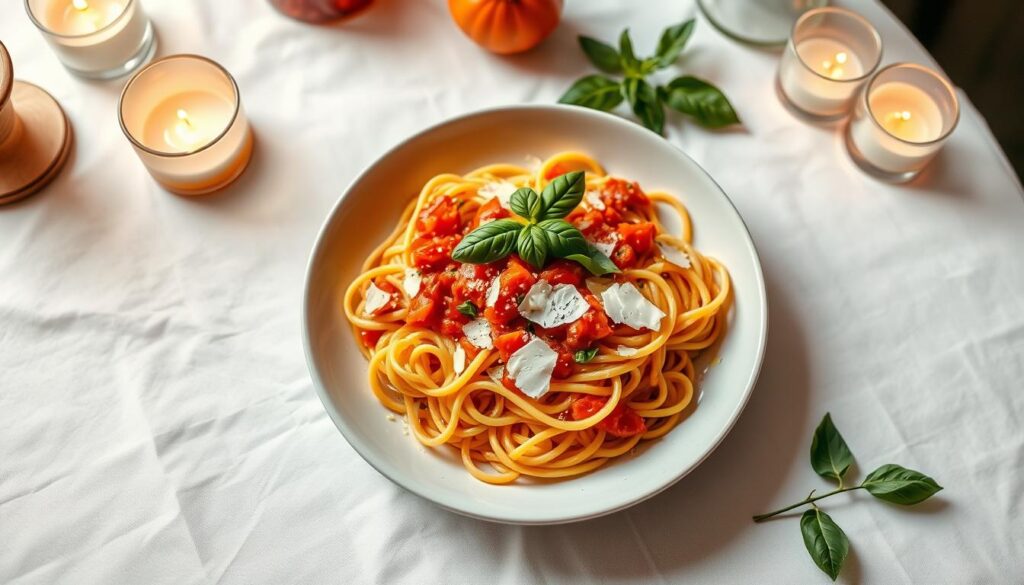
Don’t overcrowd your plate (less is more). Avoid sauce smears on the rim (clean it up!). And don’t stick to one color (add some contrast). Your food presentation should be balanced with height, color, and careful placement.
Practice with leftovers before serving. Your leftover pasta is a chance to try new things. Use the clock method or create height with your food.
Great food presentation begins with planning. Think about colors when you plan meals. Green beans look good with mashed potatoes, and salmon is nice with white rice. For more tips, check out this article on plating strategies.
Lastly, warm your plates. Cold plates can ruin your dish’s look. Your plate should look great until it’s served.
Social Media Inspiration
Let’s be real: if your meal doesn’t get Instagrammed, did it even taste good? Social media has turned plating into an Olympic sport. Artful plating techniques score perfect tens. Italian plating dominates this visual arena because it understands food is theater.
Forget filters – food photography is 80% lighting. Natural light makes your carbonara glow like Renaissance art. The 45-degree angle showcases those beautiful layers.
Flatlays transform antipasti into modern masterpieces. Hashtags are the breadcrumbs leading foodies to your creations. #FoodPorn isn’t just a tag – it’s a declaration that your plating game rivals nonna’s secret recipes.
The secret? Italian plating principles translate perfectly to square frames: contrast, height, and that impeccable sauce drizzle. Your phone eats first because we consume with our eyes before our mouths.
The best part? These artful plating techniques work whether you’re serving Michelin-star dishes or Tuesday night pasta. Just don’t drop your phone in the risotto – no filter fixes that.