
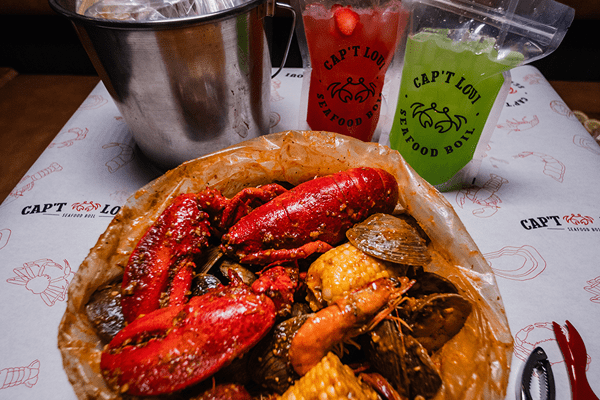
When analyzing the local dining scene in our Montclair restaurant reviews, I typically focus on composed plates, precise knife work, and structural plating. Serving food inside a translucent plastic bag runs entirely counter to classical European execution. True culinary intelligence does not care about the vessel. Just down the road from us at 10 Park Street, Cap’t Loui executes the Cajun seafood boil with a level of thermal discipline that demands absolute respect.
The Cajun Boil
Boiling crustacean meat sounds simple. In reality, it is a highly volatile cooking method. Shrimp, snow crab, and lobster tail possess incredibly tight muscle fibers that seize the moment they hit boiling water. Overcook a pound of shrimp by sixty seconds, and you serve your guests inedible rubber.
Cap’t Loui avoids this operational failure through strict heat management. The kitchen calculates that the seafood continues to cook inside the sealed bag before it reaches the table. They pull the proteins early, allowing the ambient heat of the trapped steam to finish the cooking process gently. Grasping the thermal dynamics of poaching shrimp proves exactly why this precise timing separates amateur kitchens from professional operations.
The Signature Sauce
The defining element of any seafood boil is the seasoned butter. Casual chains routinely serve broken, greasy butter that separates from the seasoning and pools sadly at the bottom of the bag. Cap’t Loui treats their signature sauce as a proper emulsion. They aggressively bind the garlic, Cajun spices, and liquid fat together, creating a thick, highly viscous coating that physically clings to the shells, the corn, and the potatoes.
This requires serious technique. When you order their garlic noodles as a side, the starch from the pasta binds with the residual sauce from the bag. It creates a rich, structurally sound dish that stands entirely on its own.
| The Menu Concept | The Kitchen Execution | The Palate Function |
| The Signature Boil | Precise pull times to account for in-bag thermal carryover. | Protects the delicate moisture of the crab and shrimp. |
| The Garlic Noodles | High-starch pasta tossed in emulsified garlic butter. | Acts as a heavy carbohydrate sponge for the intense Cajun spices. |
| The Fry Station | Flash-frying soft shell crab and calamari at exacting temperatures. | Delivers serious external crunch without greasy absorption. |
Discipline at the Fry Station
You cannot evaluate a seafood joint without checking the fryers. Cap’t Loui offers heavy baskets of fried calamari, soft shell crab, and fish. A weak kitchen drops the temperature of their oil by overcrowding the baskets, resulting in soggy, oil-logged breading.
The fry station here holds its temperature beautifully. The crust on their fish and chips shatters upon impact, revealing tender, steaming white fish underneath. Maintaining this standard during a Friday night rush proves the line cooks operate with severe focus. For an analytical look at why temperature recovery dictates a successful crust, this guide to strict frying mechanics explains the chemistry of grease resistance.
Communal Dining
Eating here is a physical, messy process. You wear a bib, tear through crab legs with your bare hands, and share massive bags of food with the table. This format completely bypasses the stiff, isolated behavior seen in standard dining rooms. It forces direct engagement.
The social function of Cap’t Loui mirrors the hospitality philosophy of Demetri Malki at De Novo. Both operators build spaces that serve as communal anchors. Cap’t Loui strips away every ounce of fine-dining pretense and replaces it with pure, highly executed comfort. They prove that you do not need white tablecloths to demonstrate severe culinary competence.