
Let’s knock down the wine myths, shall we? I’ve seen many people get too caught up in pairing rules. It’s like they’re trying to solve world peace.
The truth is, most “rules” are as helpful as a screen door on a submarine. That old saying, “red with meat, white with fish,” is outdated.
Do you remember when people thought the earth was flat? Wine pairing myths are just as outdated. Our adventure with Montepulciano d’Abruzzo shows how these Italian wines ignore all the rules.
They offer amazing flavors that surprise everyone. It’s time to move towards a more creative Italian wine pairing approach. Let’s focus on taste, not myths.
The mix-up between Montepulciano d’Abruzzo and Vino Nobile di Montepulciano shows we need a fresh start. These affordable Italian wines are sadly overlooked because of these myths.
Chef-Sommelier Challenge
Imagine culinary Thunderdome meets wine academia. Two enter, one pairing emerges victorious. That’s the chef-sommelier dynamic in action.
Joe approaches wine like a chemist – all structure and acidity. Carmela tastes like an artist – emotion and memory first. Their rating system? Pure chaos theory with points.
Our Chianti experiment revealed the beautiful tension. Sue’s homemade Italian feast met wines that defied tradition. The results? Sometimes brilliant, sometimes baffling.
The real magic happens when kitchen creativity collides with wine expertise. It’s not about rules – it’s about creating experiences that make taste buds sit up and take notes.
| Approach | Chef Perspective | Sommelier Perspective | Collaboration Result |
|---|---|---|---|
| Flavor Analysis | Ingredient-driven pairing | Structure-focused matching | Unexpected harmony |
| Risk Tolerance | Bold experimental moves | Calculated deviations | Balanced innovation |
| Success Metric | Memorable experience | Technical excellence | Transcendent pairing |
The best unusual wine pairs emerge from this creative friction. When traditional expectations get a hard reboot, magic happens on the palate.
Surprising Matches
Italian wine pairing can be full of surprises. Some of the best matches are truly unexpected. They might make some sommeliers raise an eyebrow, but they’re actually brilliant.
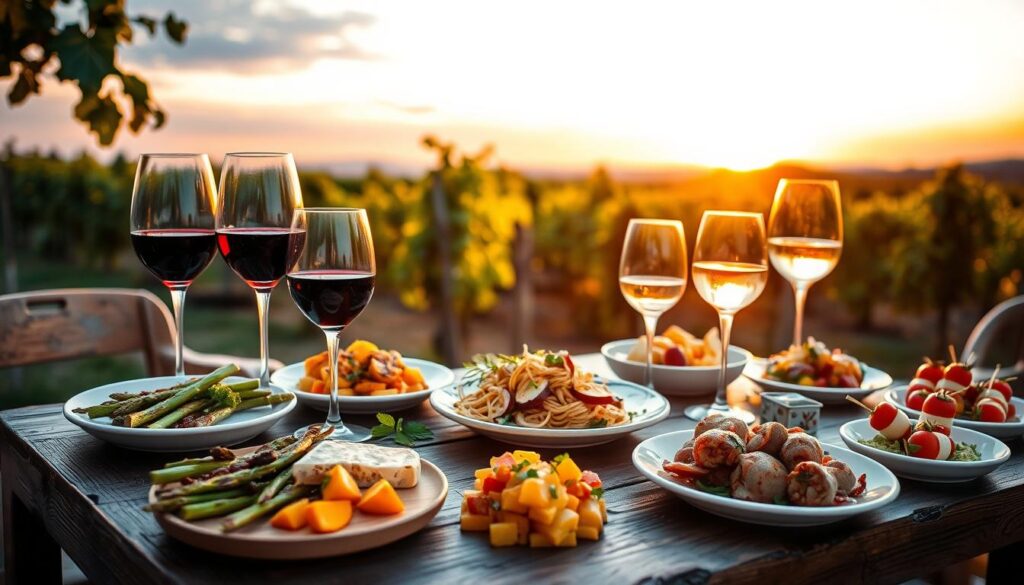
Imagine finding out your conservative uncle loves punk rock. The shock turns into delight. That’s what happens with these creative italian wine pairing surprises.
Unexpected Duets That Actually Work
Vermentino and artichokes might seem like an odd pair. Artichokes have a compound that makes wines taste sweet. But Vermentino’s acidity and citrus notes perfectly balance it out.
Chianti pairs well with bitter greens and kalamata olives. That $10 D’Aquino Chianti from Trader Joe’s is a great example. Its tart cherry notes and tannins complement the flavors beautifully.
Montepulciano d’Abruzzo goes great with Middle Eastern food. It might seem odd, but the wine’s soft tannins and fruit notes match spiced lamb and chickpeas perfectly.
These pairings are all about flavor conversations. They challenge our usual pairing ideas. For more unique ideas, check out these unexpected port pairings.
| Wine | Unexpected Pairing | Why It Works | Flavor Impact |
|---|---|---|---|
| Vermentino | Artichokes | Acidity cuts through cynarin | Crisp contrast |
| Chianti | Bitter greens & olives | Tannins balance bitterness | Harmonious balance |
| Montepulciano d’Abruzzo | Middle Eastern spices | Soft tannins complement spices | Cultural fusion |
| Lambrusco | Pizza Nova | Bubbles cut through richness | Refreshing contrast |
The table shows how these surprising matches work. Each combination is based on a logical pattern.
Want to try more unique pairings? Contact experts who love to think outside the box. The best creative italian wine pairing experiences often come from breaking the rules.
Great wine pairing is about delicious results, not just following rules. Sometimes, the most surprising combinations create unforgettable moments.
Tasting Notes
Let’s play flavor detective. Wine descriptions are more than fancy words. They’re clues for finding unusual wine pairs that work in real life. I’ll show you how to understand them without needing a sommelier degree.
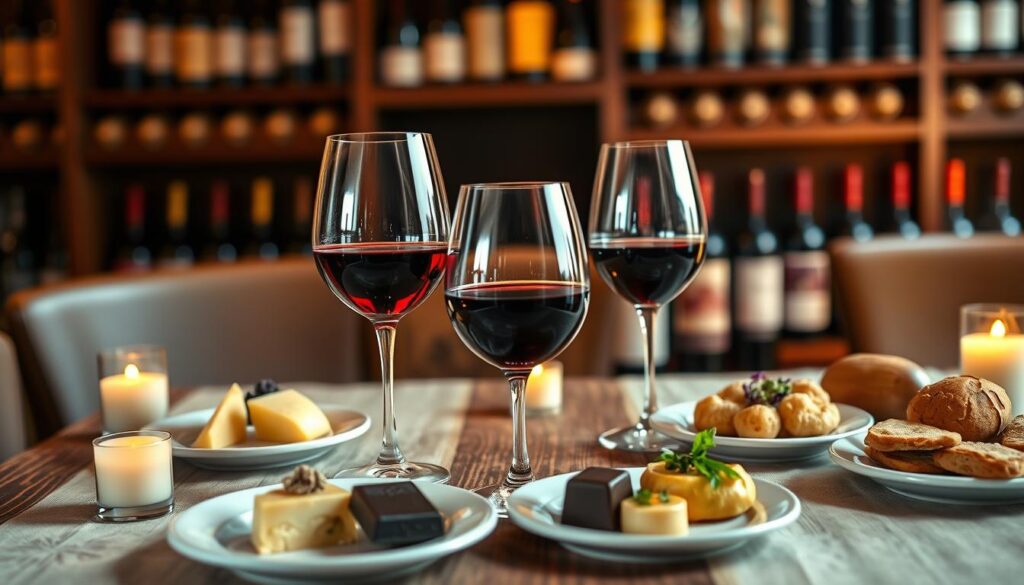
Decoding the Flavor Matrix
Masciarelli Montepulciano d’Abruzzo is a great example. “Black cherry and plum” means it’s juicy and can handle tomato sauce. The cinnamon note is your secret weapon against spicy dishes.
Cantina Zaccagnini’s wine is smoky and fruity. It’s perfect with grilled meats or barbecue pizza. The smoke cuts through richness, and the fruitiness balances acidity.
La Valentina’s wine has floral violets and raspberry. It might sound delicate, but its floral notes mean it can handle bold flavors like garlic or herbs.
Professional tasting notes are useful when you understand them. Fruit descriptors suggest food flexibility, earthy notes indicate structure, and mineral references mean acidity that cuts through fat.
The Reality Check
No one tastes “crushed chalk” unless they’re chewing on classroom supplies. But that mineral note? It means the wine has enough acidity to handle rich, fatty foods.
“Forest floor” in a Chianti’s description doesn’t mean eating dirt. It means the wine has earthy complexity that’s great with mushrooms or roasted vegetables.
The best unexpected wine pairings come from understanding these tasting notes. A “black cherry pie” description means the wine is sweet and spicy. It works with surprisingly diverse foods.
Remember, tasting notes are just suggestions. Your palate is the final judge. They give you starting points for experimentation.
How to Experiment at Home
Forget what you thought you knew about wine pairing. The kitchen is your lab, and tonight’s dinner is your test. You don’t need a fancy degree or a lot of money to find amazing flavor matches.
Think of this as culinary jazz improvisation. Sometimes the best notes come from unexpected places. Ready to become a mad scientist of flavor?
Building Your Flavor Laboratory
Start with the right tools. You’ll need curiosity, a notebook, and affordable wines. I mean bottles under $20 that surprise you with their depth.
Temperature is key. Many reds do better at cellar temperature (around 55-60°F) than at room temperature. Whites should be chilled but not too cold – you want to taste the wine, not just the cold.
Montepulciano d’Abruzzo is your new best friend. This versatile Italian wine goes well with pasta, pizza, and roasted veggies. It’s the Swiss Army knife of your food and wine pairing at home adventures.
The Systematic Tasting Method
Create your own tasting flight. Open two or three different bottles with similar meals throughout the week. Take notes on what works and what doesn’t.
Ask yourself these questions:
- Does the wine enhance the food?
- Does the food make the wine taste better?
- Is there a pleasant aftertaste?
- Would I serve this to friends?
Some of my most brilliant discoveries happened by accident. The goal isn’t perfection – it’s delicious discovery. Sometimes that slightly sweet Lambrusco with spicy sausage? Pure magic.
Italian Dish Pairing Experiments
Try these starting points for your creative Italian wine pairing experiments:
| Dish | Wine Experiment | Why It Works |
|---|---|---|
| Tomato-based pasta | Barbera | High acidity cuts through tomato richness |
| Creamy risotto | Soave Classico | Creamy texture meets crisp freshness |
| Grilled vegetables | Verdicchio | Herbal notes complement charred flavors |
| Hard cheeses | Chianti Classico | Tannins scrub your palate clean |
Remember: the best pairing is the one that makes you smile. Your palate is unique – trust it. Your discoveries might just challenge everything we thought we knew about Italian wine relationships.
Now go open something unexpected. The worst that happens? You drink wine with dinner. The best? You discover your new favorite combination.
Community Favorites
The magic happens when wine lovers share their finds. Our community shows that you don’t need to be a sommelier to find great pairings. All you need is curiosity and a love for trying new things.
Unexpected Wins From Real Drinkers
Bud’s discovery of Pinotage with barbecue ribs was a game-changer. It’s a perfect example of an unusual wine pair that surprises and pleases. Carol’s question about pasta pairings led to a flood of creative ideas.
The Wine Pair podcast community is full of these hidden gems. They prove that the best advice comes from those who actually drink the wine, not just write about it.
Cha McCoy’s approach to inclusive wine pairings really speaks to us. She highlights how cultural backgrounds lead to unforgettable wine pairings. Our community loves this idea, suggesting unique combinations that reflect different tastes.
These shared discoveries teach us that wine pairing wisdom comes from experience, not rules. The next amazing wine pair might be in your neighbor’s glass.