

When you enter most dining areas, what do you see? Aesthetic wallpaper and trendy light fixtures. Maybe a distressed barn door for that rustic look. It’s decoration added last, without a clear purpose.
Real design is different. Think of your favorite movie’s opening scene. Every detail is chosen carefully, setting the story before words are spoken. Your venue’s look should be just as intentional.
Designer David Rockwell said, “Designing a restaurant is like building a stage. Everything has to support the performance.” Your concept is the director. It decides if chairs are for quick meals or long nights. It also determines if walls spark hunger or conversation.
This is where hospitality storytelling starts. It’s about creating a story in every detail. It turns a generic ‘Italian’ place into a journey to a Sicilian courtyard. The aim is to evoke feelings, not just show something.
Let’s ditch the Pinterest boards. Let’s create spaces with a clear vision.
Visual storytelling elements
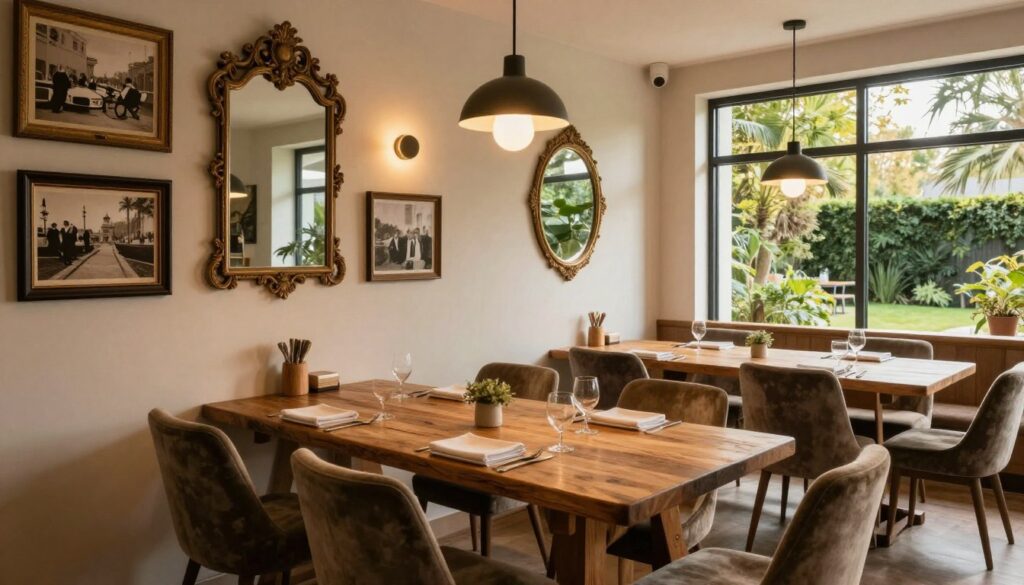
Think of your dining room as a carefully edited story. Lighting, color, and texture are like punctuation and prose. They tell your restaurant’s story before the food arrives.
Lighting is not just for seeing; it’s emotional. Ambient light sets the mood, like the dawn for brunch or twilight for supper. Task lighting highlights the kitchen and bar. Accent lighting adds drama.
Warm and cool tones have big effects. Warm light invites you to relax and enjoy dessert. Cool light is for quick, modern meals. Good branded spaces mix both for a rich experience.
Furniture is like grammar. Sleek chairs say “modern efficiency.” Tufted banquettes invite you to stay. Durability is key; no one likes a flimsy chair.
Colors have deep meanings. Red and orange stir hunger and urgency. Green and beige calm and suggest freshness. A red wall is like an exclamation mark.
| Design Element | Narrative Function | Psychological Impact | Practical Consideration |
|---|---|---|---|
| Lighting (Ambient) | Sets the overall mood & time of day | Warm = comfort, Cool = alertness | Dimmable systems for flexibility |
| Color Palette | Communicates brand personality & energy | Reds stimulate, Greens calm, Blues trust | Consider maintenance & fading |
| Furniture Style | Defines formality & pace of experience | Plush = leisurely, Minimal = efficient | Balance aesthetics with durability |
| Flooring Material | Grounds the concept literally & figuratively | Hardwood = warm, Concrete = industrial | Prioritize safety & ease of cleaning |
| Acoustic Design | Controls the soundtrack of the space | Quiet = intimate, Lively = energetic | Sound-absorbing materials vs. hard surfaces |

Flooring choices are like the story’s foundation. Hardwood is warm and traditional. Concrete is industrial and urban. Tile is practical and patterned. Make sure the floor is safe and doesn’t tell a story of neglect.
Wall decor should be your main focus. One striking piece can tell a powerful story. Too much decor can be overwhelming. Choose something that speaks clearly, like local art or vintage maps.
Acoustics are key to a good story. Too much noise or too much silence can ruin the experience. Good acoustics let conversations flow while adding to the overall atmosphere. It’s what makes a story enjoyable.
Tableware and uniforms support the main story. Rustic cutlery fits a farm-to-table theme. Fine china is for upscale dining. Staff uniforms should match the brand’s style. Consistency is important for believable branded spaces.
The menu is a critical part of brand storytelling. Its design and content should reflect the brand. The menu is what guests take home; make it memorable.
Companies like AvroKo consider every detail a chapter in a story. From water glasses to napkins, everything contributes to the overall narrative. It’s all about consistency.
This is semiotics for the dining room. Your space should tell your story so well that guests understand it before they even read the menu. When everything works together, you create an immersive experience where every visit is like turning a page in a book.
Connecting past and present
Authenticity in hospitality is a mix of wanting real experiences and perfect settings. We crave the ghost stories but also clean bathrooms and good lighting. This is where hospitality storytelling turns from marketing to uncovering history.
Today’s top restaurants are like time machines. They serve food and share stories of history, local culture, and personal journeys. These stories are not just extras. They are the main structure.
Lucy Restaurant & Bar in Napa Valley is a great example. It has a garden that grows food for the restaurant. This makes the farm-to-table promise real. You’re not just eating a salad. You’re tasting the garden’s story.
Julia restaurant at La Posada de Santa Fe is another example. It has a 19th-century matriarch’s ghost. This isn’t a joke. It’s a way to add atmosphere. The history is felt, not just seen.
These places show how to connect past and present. One is about growing food. The other is about feeling the past. Both succeed by making their stories part of every guest’s experience.
The table below shows how different restaurants use time to create unique branded spaces:
| Restaurant | Narrative Type | Temporal Focus | Primary Sensory Hook | Modern Twist |
|---|---|---|---|---|
| Lucy Restaurant & Bar | Agricultural Biography | Cyclical (Seasonal Growth) | Taste & Sight (Garden View) | Certified Organic Practices |
| Julia Restaurant | Historical Haunting | Linear (19th Century to Present) | Atmosphere & Sound | Luxury Accommodation in Historic Setting |
| Modern Farm-to-Table | Regenerative Journey | Future-Focused (Legacy Building) | Taste & Ethical Satisfaction | Climate-Conscious Sourcing |
The best stories today are about sustainability and the future. That tomato isn’t just food. It’s a link to a farmer’s story and a message for the planet.
This is the art of temporal weaving. The past must connect to a present that values the earth, community, and where things come from. The story should feel like a conversation, not a museum piece.
Getting this right makes a place more than just themed. It’s a branded space that truly resonates. The design is not about looking old. It’s about making history come alive for today’s guests. Every choice tells a part of the ongoing story.
The best places become living museums. They don’t just look back. They make history relevant, tasty, and important for today’s guests. The connection is not a trick. It’s the heart of the place.
Creating memorable impressions
The final test of any restaurant isn’t just the first bite. It’s the lasting memory as you leave. Serving a good meal is easy. But creating a lasting moment needs a special kind of hospitality storytelling.
Think about Capolinea’s tableside martini, made with liquid nitrogen. It’s not just a drink. It’s a science show on your table. Or Ceiba’s guaranteed view of Disney’s fireworks. These aren’t just extras. They’re the highlight of your evening.
Luxury has changed. It’s not just about fancy marble. It’s about personal experiences. Today, 55% of travelers say great service is what makes a place luxurious. It’s about engaging with guests, not just serving them.
Smart branded spaces also connect with their neighbors. They use tools like Toast and OpenTable for ease. They become community centers, not just places for travelers. A great local bar is the neighborhood’s gathering spot.
This focus on immersive experiences sets memorable places apart. It’s about combining atmosphere, service, and texture into one. Like at De Novo in Montclair. The goal is to turn your space into a legend. A story your guests will love to share.