
Ever wonder what a wine expert thinks when pairing the perfect glass with your meal? Forget the old myths about strict rules and complex charts. The truth is much more fascinating.
It’s like a conversation between the food and wine. It’s not about memorizing rules. It’s about understanding how flavors work together. The key is to match intensity with intensity.
Imagine pairing a bold personality with someone just as bold. A light dish needs a soft wine. A strong meal calls for a bold glass. This simple idea beats all those outdated “red with meat” sayings.
Good food and wine pairing is a thrilling adventure of sight, smell, and taste. It’s where science and instinct meet. It’s where personal experience and analytical thinking come together.
The best pairings create something magical. They make both the dish and the wine better than they are alone. It’s not hard. It’s a delicious philosophy.
Classic Italian Pairings
Let’s explore the timeless pairings that have become culinary rules. These aren’t just traditions; they’re brilliant chemistry lessons disguised as dinner.
One of the most reliable italian sommelier tips I’ve learned is: ‘what grows together, goes together.’ This isn’t just folk wisdom – it’s geographical destiny. The tomatoes in Campania’s volcanic soil? They’re begging for a Sangiovese from Tuscany.
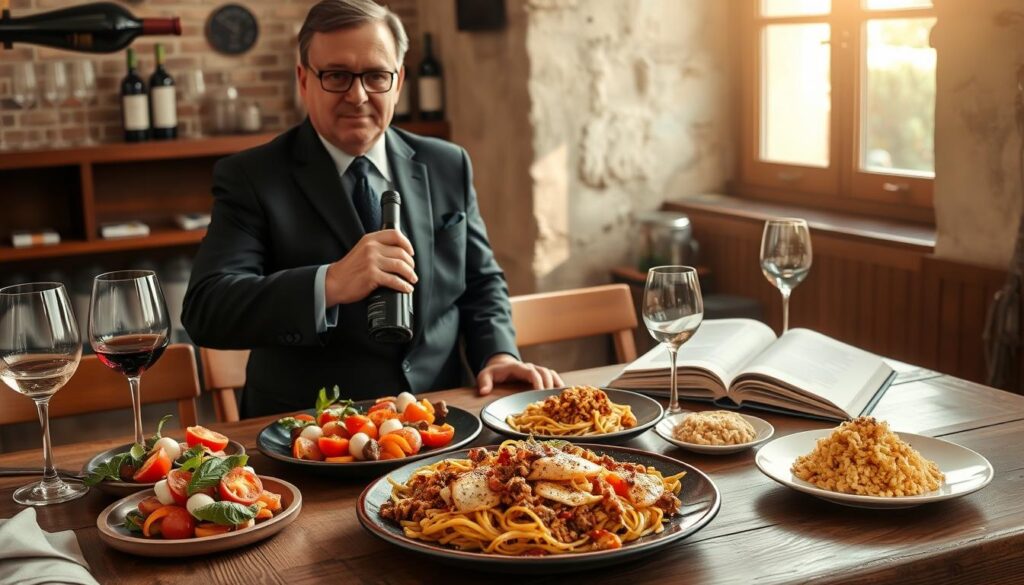
Why does Chianti with tomato-based pasta work like magic? The acidity in both creates a beautiful tension. The wine’s tannins cut through the tomato’s richness, while the fruit notes enhance the sauce’s sweetness. It’s like watching two Italian opera singers harmonize – separately magnificent, together transcendent.
Then there’s Prosecco’s relationship with creamy sauces. This sparkling wonder doesn’t just complement rich dishes – it slices through them like a culinary lightsaber. The bubbles act as microscopic scrub brushes for your palate, resetting your taste buds between each luxurious bite.
Regional pairings developed over centuries outperform modern experimentation. There’s a reason Barolo loves truffles from Piedmont – they’ve been neighbors for generations. These combinations work because they’ve been field-tested by millions of Italian nonnas over hundreds of years.
Italians have turned food and wine pairing into a cultural philosophy. Wine isn’t just a beverage; it’s the conversation starter, the bridge between dishes, and the palate cleanser. Every meal becomes a celebration of balance and pleasure.
Here’s how you can apply this wisdom to your own Italian-inspired dinners:
- Match wines from the same region as your dish’s inspiration
- Let acidity be your guide – tart foods need tart wines
- Remember that sparkling wines are your secret weapon against richness
- Trust centuries of tradition over trendy new combinations
The beauty of these classic pairings lies in their simplicity. They don’t require a degree in organic chemistry – just an appreciation for how things naturally belong together. It’s the culinary equivalent of finding your soulmate in your hometown.
These italian sommelier tips aren’t just about taste – they’re about understanding a culture where food and wine are inseparable partners in the dance of life. When you get it right, you’re not just eating and drinking; you’re participating in a centuries-old conversation.
Creative Contemporary Combinations
Most food and wine pairing advice is old. We’re in a new era of food, but our wine pairing is stuck in the past. It’s time to update our wine pairing.
Modern sommeliers are breaking the rules. They’re pairing Italian wines with global dishes. They say, why not? The world is our playground, not just our plates.
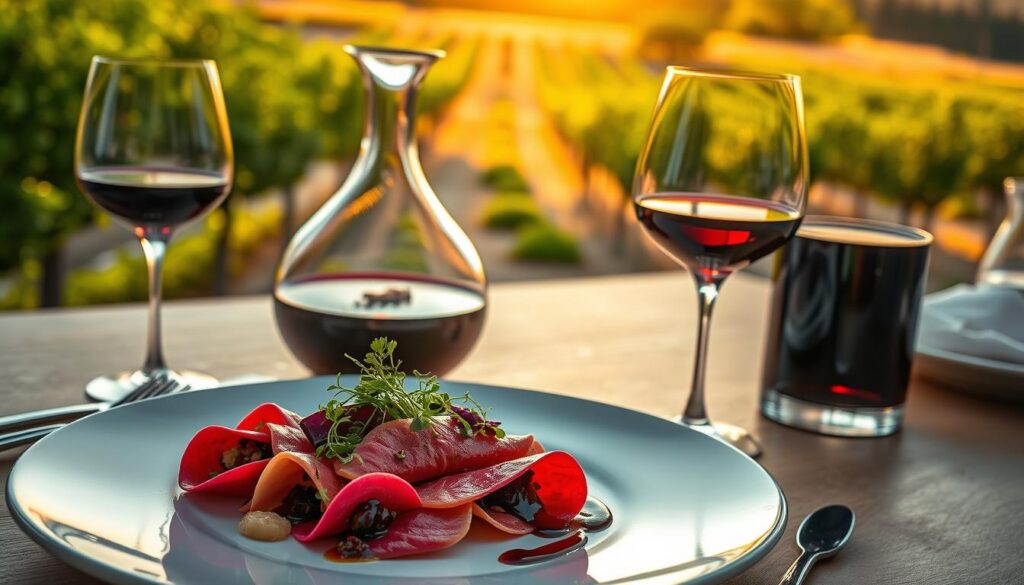
Try off-dry Riesling with spicy Thai food. People say drink local beers, but this German white is perfect. It cools the heat and matches the spices.
Italian reds and Mexican food are a match made in heaven. A bold Barbera pairs well with mole sauces. Its acidity and fruit notes make it a perfect match.
The key is to enjoy the journey, not just the destination. Wine pairing is about pleasure, not perfection. Your taste buds want what tastes good, not what’s traditional.
Here are some of my favorite rule-breaking pairings:
- Lambrusco with Korean BBQ – The fizz and fruitiness balance the richness and sweet-spicy flavors
- Vermentino with sushi – Its citrus and saltiness match the ocean flavors better than many sakes
- Amarone with barbecue ribs – The wine’s richness pairs well with smoky sauces and its dried fruit notes enhance the sweetness
The best pairings come from trusting our taste. Your next great pairing might break all the rules. And that’s why it will be amazing.
Balancing Acidity and Body
Acidity and body are like the yin and yang of wine pairing. They create a balance between zesty brightness and weighty texture. This balance is what makes a meal memorable.
Acidity is like a flavor enforcer in your mouth. It cuts through rich, fatty dishes like a lightsaber. A crisp Sauvignon Blanc can make creamy fettuccine alfredo taste refreshing.
Body, on the other hand, is about weight and texture. It’s the difference between a light Pinot Grigio and a heavy Barolo. The right match prevents the wine from overpowering the food.
Here’s a key italian sommelier tip. Match acidity with acidity. A high-acid wine like Vermentino pairs well with seafood. It creates harmony, like two puzzle pieces fitting together.
Tannins in red wines have a special effect. They bind with proteins and fats, making the wine smooth. This is why a tannic Chianti Classico goes well with a fatty ribeye steak.
Alcohol content also plays a role. Higher alcohol wines can amplify spicy heat. Lower alcohol wines provide relief. This is important when pairing with spicy dishes.
| Wine Characteristic | Food Pairing Effect | Perfect Italian Example |
|---|---|---|
| High Acidity | Cuts through fat, cleanses palate | Vermentino with fried calamari |
| Full Body | Stands up to rich dishes | Barolo with wild boar ragu |
| High Tannins | Softens with protein and fat | Chianti with bistecca alla fiorentina |
| Low Alcohol | Reduces spice perception | Soave with spicy arrabbiata |
The science behind wine and food pairing is fascinating. Understanding how compounds interact can make pairings strategic. For more, check out the science of wine and food pairing.
Practical assessment is key. Swirl your wine to see how it coats the glass. Taste for that mouth-watering sensation. With practice, these italian sommelier tips become second nature, making your dining experiences extraordinary.
Remember: acidity cleanses, body supports, and balance creates magic. Get these elements right, and you’re not just eating and drinking. You’re conducting a symphony of flavors.
Chef-Sommelier Collaborations
Ever wonder why some meals feel like a perfect dance while others are awkward? The secret is the chef-sommelier team. They turn simple meals into amazing experiences.
When chefs and sommeliers work together from the start, magic happens. It’s like creating a perfect match, not forcing things. This makes food and wine pairing the highlight of the meal.
In Italy, I’ve seen this teamwork in action. Tasting Barolo with truffles in Piedmont is special. Meeting the winemaker and truffle hunter adds to the experience. These traditions are alive, not just memories.
Kitchens are like theaters, with menus and wines carefully chosen. Sommeliers pick wines for dishes before they’re even made. It’s like they can see the future. This makes every meal feel inevitable, not just a coincidence.
Want to bring this magic to your home? Play both roles at once:
- Start with wine, then plan dishes around it
- Think about texture and weight, not just flavor
- Use contrasting elements to enhance both
- Remember, acidity can cut through richness
- Trust your gut—if it feels right, it probably is
This approach turns dinner parties into special events. It’s about creating intentional pairings, not just hoping for the best. The best pairings come from teamwork, whether in a restaurant or your own kitchen.
When planning a meal, think about making a lasting connection. This mindset can change your whole dining experience.
Readers’ Questions Answered
Can you actually drink red wine with fish? Absolutely. Try a light Pinot Noir with salmon or a chilled Lambrusco with fried seafood. Some of the best italian sommelier tips involve breaking rules intelligently.
Do you need to spend a fortune? Never. Great pairings come from understanding, not expensive bottles. A $15 Barbera can outshine a $50 Cabernet with the right pasta dish.
Emergency pairing strategy? Bring a versatile Italian white like Vermentino or a food-friendly red like Dolcetto. They handle most menus gracefully.
Dietary restrictions? Vegan wines exist. Low-tannin options work for sensitive palates. The key italian sommelier tips always emphasize flexibility over dogma.
Wine preservation gadgets? Some work, many don’t. For home use, simple vacuum stoppers extend wine life adequately. Fancy systems often disappoint like a sequel to a perfect film.
Your most valuable italian sommelier tips? Trust your palate, experiment fearlessly, and remember: the best pairing is whatever makes your meal more enjoyable. Even if that’s Coca-Cola with lasagna.