

The new wave of reservation policies is changing the small ritual that starts many restaurant meals: choosing a time, entering a card, and hoping the table is ready when you arrive. For Montclair diners, the shift is not only about technology. It is about trust between guests and restaurants, especially as dining rooms try to protect peak-hour revenue while still keeping hospitality warm and clear.
This is a practical review of what diners should expect before booking, based on reported industry changes through 2025 and 2026. Some examples come from high-demand cities, not Essex County, so they should be read as signals rather than proof that every local restaurant will follow the same path. Still, the direction is clear: more restaurants are asking guests to understand cancellation windows, card holds, large-party rules, and late-arrival grace periods before the night begins.
Why Reservation Policies Feel Stricter Now
Reservation Policies And The Price Of An Empty Table
The toughest rules tend to appear where demand is high and a missed table is hard to refill. In San Francisco, the upscale restaurant JouJou introduced a $75-per-person fee for reservations canceled less than 24 hours ahead, SFGate reported. That is a Bay Area example, not a Montclair rulebook, but it shows why diners are seeing firmer language around cancellation timing. A no-show at 7:30 p.m. on a Saturday can mean lost sales for servers, bartenders, and the kitchen, not just an empty chair.
The guest-side reaction is understandable. Dining out has become more expensive, and a fee can feel like one more charge before anyone has tasted a bite. The practical move is not to avoid reservations altogether; it is to read the booking screen the way you would read a menu price. If a restaurant asks for a credit card, pause long enough to check the cancellation cutoff, the per-person fee, and whether the rule changes for holidays or tasting-menu nights.
The Broker Crackdown Matters To Regular Diners
Unauthorized reservation resale has also pushed restaurants and booking platforms toward tighter controls. Resy reported that state laws in New York and Florida banning unauthorized reservation resale had taken effect by mid-2025, and that after New York enacted the Restaurant Reservation Anti-Piracy Act, Resy saw a 90% year-over-year drop in no-shows caused by bots and brokers, according to its Resy retrospective. For diners, that matters because a booking made through an unauthorized third party can separate the restaurant from the real guest.
If the restaurant cannot reach the person who will actually sit at the table, it may be harder to confirm arrival time, note accessibility needs, adjust a party size, or explain a weather-related patio change. The crackdown is not just about platform control. It is also about restoring a direct line between the dining room and the people walking through the door.
What Changes Diners May See Before Booking
Card Holds, Deposits, And Larger Parties
Some reservation policies now ask for a credit card even when there is no upfront charge. Others may require a deposit for a large party, a holiday meal, a special menu, or a peak-time table. These details can feel formal, but the reason is simple: a six-person no-show creates a much larger gap than a missed two-top. Restaurants may also set a shorter grace period for late arrivals, especially in dining rooms that rely on turning tables at planned intervals.
For guests, the key is to separate a card hold from a charge. A hold usually means the restaurant can apply a fee if the booking is missed or canceled after the stated window. A deposit may be collected in advance and then applied to the bill or retained under the stated terms. The wording matters. If it is unclear, call the restaurant before booking, especially if you are planning for guests who may arrive from different towns or need extra time to park.
Reservation Policies For Last-Minute Plans
Diners have not lost their appetite for spontaneity. Industry reports cited in the research for this review pointed to growing use of wait-notify tools and last-minute booking interest. That trend can benefit Montclair diners who are flexible about time, party size, or seating style. A 5:15 p.m. table, a later dinner, or a bar seat may open up after earlier cancellations, while a prime four-top may stay locked behind stricter terms.
- Check the cancellation deadline before confirming, not after plans change.
- Look for party-size rules, especially for six or more guests.
- Confirm whether a deposit is refundable, credited to the bill, or tied to a special menu.
- Read late-arrival language so the table is not released before your party is complete.
- Book directly with the restaurant or an authorized platform whenever possible.
A related primer on what diners should expect from restaurant reservations is useful if you want a quick checklist before committing to a table.
How Montclair Diners Can Read The Fine Print
Local Dining Habits Meet National Booking Rules
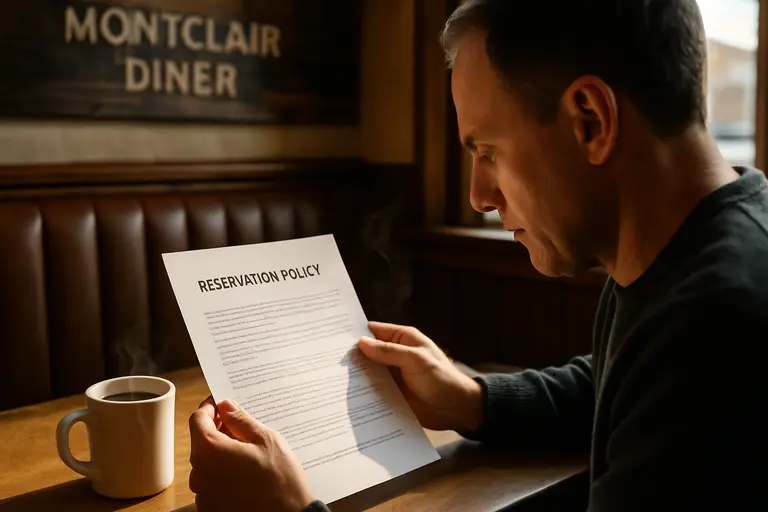
For Montclair diners, reservation policies deserve a closer look because our dining culture often blends planned nights out with casual neighborhood habits. A birthday dinner, a post-show meal, a family visit, or a quick weeknight meet-up can all involve different levels of commitment. A restaurant that feels relaxed at lunch may still enforce tighter dinner rules on Friday or Saturday. Without verified public policy details for every local dining room, the safest approach is to check each restaurant’s own booking page or call directly.
That direct contact can also preserve the hospitality that drew people to neighborhood restaurants in the first place. If your group includes a stroller, a guest with limited mobility, or someone who may arrive late by train, the restaurant is more likely to help when it hears from you early. The rule printed on a booking page is the baseline; communication often determines whether the meal starts smoothly.
Technology Should Not Replace Hospitality
Booking apps, reminder texts, and automated confirmations can save time, but they should not make the process feel cold. Diners should expect clearer prompts: what time the table is held until, what happens if the party shrinks, whether outdoor seating is guaranteed, and how to cancel without penalty. Restaurants should expect guests to take those prompts seriously. The fairest system is one where the diner knows the terms and the restaurant applies them consistently.
For a nearby network reference on café-style dining and local food coverage, Hudson Street Cafe provides insights that go beyond a single dining experience, offering a broader view of restaurant culture.
Reading Reservation Policies Before You Book
A Practical Pre-Booking Routine
Before confirming a table, take one minute to review the essentials. Is there a cancellation fee? Does it apply per person or per table? Is the deadline 24 hours, 48 hours, or tied to a special event? Does the restaurant require the whole party to arrive before seating? Can you modify the guest count online, or do you need to call? These questions sound plain, but they can prevent the most common sources of friction at the host stand.
Group meals deserve extra care. If you are the person booking, share the deadline with your guests as soon as the reservation is made. Ask for firm confirmations before the penalty window begins. If someone cancels late, contact the restaurant rather than hoping the smaller party will not matter. A dining room may be able to adjust, but it needs notice.
Fair Expectations On Both Sides Of The Table
Fair reservation policies should protect restaurants without surprising diners. Fair diners should treat a booking as a real commitment, not a placeholder for several possible plans. That mutual respect is especially valuable in communities like Montclair, where restaurants are part of daily life, not just special-occasion backdrops. The best guest habit is simple: book through an authorized channel, read the terms, show up on time, and call as soon as plans change.
As these rules keep changing, the most reliable diner will not be the one who knows every platform trick. It will be the one who reads carefully, communicates early, and remembers that a reservation is still a promise between people.