

Remember when Italian drinks meant your grandmother’s limoncello? Those days are gone. Today’s scene would make Don Draper do a double take.
Venetian piazzas glow with orange-hued spritzes during aperitivo hour. Milan’s sophisticated bars serve classics with a twist. It’s where ancient traditions meet Instagram-worthy innovation.
Bartenders now treat amari like Picasso treated paint. They’re creating bitter masterpieces that balance tradition with experimentation. This isn’t just about drinks – it’s la dolce vita meeting molecular mixology.
The global standard for balancing history with hashtags now comes from Italy. Their approach to italian cocktail recipes combines sweetness with sophistication in every glass.
Essential Italian Spirits
If Italian spirits were Renaissance artists, Campari would be Caravaggio – dark, complex, and revolutionary. But the modern Italian bar isn’t a museum with just one masterpiece. It’s a living gallery where bitter liqueurs dance between tradition and innovation.
Bitter Foundations: Campari and Beyond
Campari doesn’t just make cocktails – it makes statements. That ruby-red hue hides more layers than a Fellini film. The initial bitter punch gives way to orange peel, herbs, and spices that linger like a good conversation.
But Campari isn’t alone on the stage. Select Aperitivo brings Venetian elegance with its cardamom and juniper notes. Cappelletti offers wine-based sophistication that whispers. Then there’s Cynar – yes, the artichoke one – which proves Italians will put anything in a bottle if it tastes interesting.
Zucca Rabarbaro brings rhubarb’s earthy intensity that separates cocktail tourists from citizens. Each spirit plays a specific role in the Italian cocktail symphony. They’re not just ingredients – they’re cultural artifacts in liquid form.
Aperol vs Campari: The Orange-Red Divide
Think of Aperol as Campari’s brighter, more approachable cousin. Where Campari brings depth and complexity, Aperol offers sunny citrus notes that welcome. The difference isn’t just about color – it’s about philosophy.
| Characteristic | Aperol | Campari |
|---|---|---|
| ABV | 11% | 20.5-28% |
| Flavor Profile | Sweet orange, gentle bitterness | Complex herbs, pronounced bitterness |
| Best For | Daytime drinks, spritzes | Bold cocktails, sipping neat |
| Color | Bright orange | Deep ruby red |
Your choice between them depends on the mood you’re crafting. Aperol makes cocktails that feel like a sunny piazza afternoon. Campari creates drinks that belong in a moody jazz club after midnight.
The beauty of these bitter liqueurs lies in their versatility. They work in everything from classic Italian cocktails to contemporary creations that push boundaries. The modern Italian bar uses them as building blocks for both tradition and innovation.
These spirits teach us that bitterness isn’t something to avoid – it’s something to explore. It adds complexity, balance, and that certain Italian je ne sais quoi that makes drinks memorable. Once you understand these bitter foundations, the entire world of Italian cocktails opens up.
Signature Contemporary Recipes
Italian mixology is more than just the Negroni. We’re in a new era where bartenders jump off tradition’s trampoline. They respect it but also love to explore.

Today’s cocktails show Italy’s changing tastes. Young people want complex drinks without being too fancy. They love bitter flavors that are fun to drink and look good on Instagram.
Modern Classics with Italian Soul
The Negroni Sbagliato is a hit. It swaps gin for prosecco, making it easy to love. The bubbles and Campari’s bitterness are a perfect mix.
The Garibaldi is another favorite. It’s a mix of Campari and orange juice. It’s sweet and bitter, loved by all.
The Jungle Bird is a surprise hit. It’s from Malaysia but feels Italian with Campari. Pineapple and Campari might sound odd, but they work well together.
Beyond the Negroni: Innovative Twists
Eeyore’s Requiem is for the brave. It combines all bitter ingredients. It’s a drink that shows balance is key.
The Hateful 8 cocktail is a mix of eight ingredients. It’s like a United Nations of drinks. Each part adds to the whole, making it special.
These drinks show where Italian mixology is going. They’re more complex, balanced, and creative. They honor tradition but also look to the future.
| Cocktail | Key Ingredients | Flavor Profile | Innovation Level |
|---|---|---|---|
| Negroni Sbagliato | Campari, Sweet Vermouth, Prosecco | Bitter, Sparkling, Balanced | Moderate |
| Jungle Bird | Campari, Pineapple, Rum, Lime | Tropical, Bitter, Sweet | High |
| Garibaldi | Campari, Fresh Orange Juice | Citrusy, Bitter, Refreshing | Moderate |
| Eeyore’s Requiem | Campari, Cynar, Fernet, Vermouth | Extra Bitter, Complex, Herbal | Very High |
| Hateful 8 | 8 Bitter Ingredients, Citrus | Ultra Complex, Balanced | Extreme |
The table shows how these cocktails compare. They all have that bitter taste but explore new flavors.
These drinks are more than just something to drink. They show Italy’s mix of tradition and innovation. When you order an Italian cocktail, you’re part of a cultural journey.
Garnish and Glassware Guide
Americans often just throw a lime wedge on their drinks. But in Italy, garnishes are like the stars of the show. They’re not just an afterthought; they’re the main event.
In Italy, drinking is like a performance. Every part of the drink has a purpose. The right garnish can make your drink smell amazing. The right glass can turn drinking into a special ceremony.
The Art of Italian Presentation
Forget what you know about cocktail decorations. In Italy, garnishes have one rule: they must improve the drink. It’s not just about looks; it’s about flavor.
Take an olive. Americans just toss it in martinis. But Italians know it adds a salty flavor that balances the drink. An orange twist is more than just a garnish; it’s a burst of citrus that smells incredible.
Here’s how the pros do it:
- Citrus twists: Express the oils over the drink, then rim the glass
- Herb garnishes: Gently clap mint or rosemary between palms to release aromas
- Fruit slices: Cut fresh and thin – no sad, dried-out wheels
Glassware as Architecture
In Italy, glassware is more than just a container. It’s designed to enhance your drinking experience. The shape helps aromas reach your nose. The thickness keeps the drink at the right temperature. And the stem keeps your hand from warming it up.
Choosing the wrong glass is like drinking from a Solo cup. But the right one turns your drink into a special experience.
| Cocktail Type | Recommended Glass | Why It Works | Perfect Garnish |
|---|---|---|---|
| Negroni | Rocks glass | Wide opening releases complex botanicals | Orange twist |
| Aperol Spritz | Wine glass | Tall shape preserves bubbles | Orange slice |
| Americano | Collins glass | Height showcases beautiful layers | Lemon twist |
| Sgroppino | Coupe glass | Elegant shape enhances creamy texture | Lemon zest |
| Garibaldi | Highball glass | Straight sides perfect for fluffy texture | Orange wedge |
The rocks glass isn’t just for whiskey anymore. It’s perfect for strong italian cocktail recipes like Negronis. The coupe glass is great for drinks that need to show off their flavors.
Collins glasses are perfect for long drinks. They let the ingredients mix well. And did you know an Aperol Spritz tastes better in a wine glass? That’s because of the way the glass works with the drink.
Mastering italian cocktail recipes means knowing how the glass changes everything. The glass isn’t just for holding your drink; it’s part of the experience.
Food Pairing Suggestions
Italians don’t just drink; they engage in culinary diplomacy. The aperitivo hour is more than a pre-dinner ritual. It’s a sophisticated dance between bitter cocktails and perfectly crafted bites.
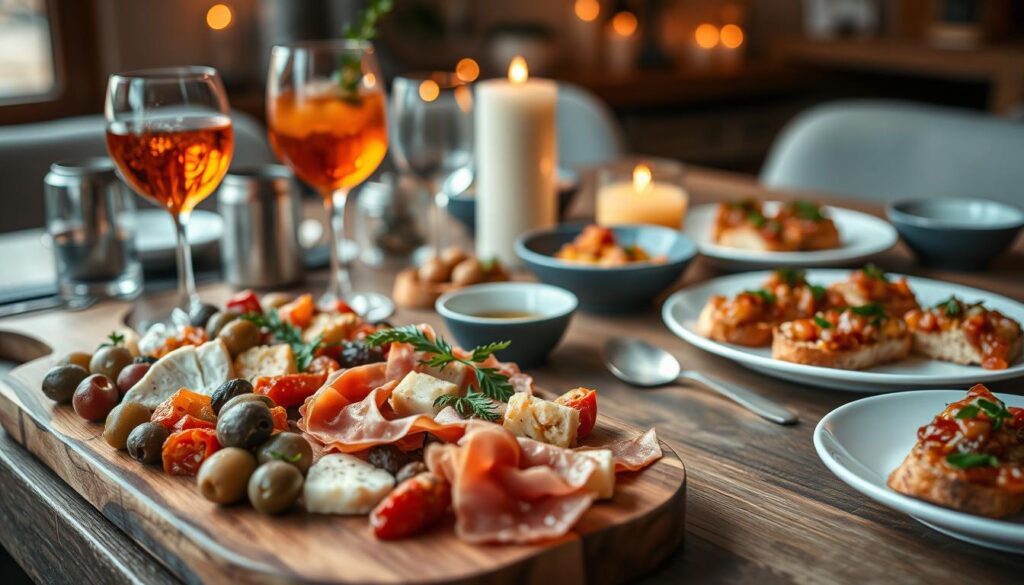
Aperitivo Hour Perfection
This isn’t snacking while sipping—it’s creating a flavor ecosystem. Each element elevates the other. The bitter complexity of Campari finds its soulmate in salty, fatty, crunchy companions.
What makes a modern italian bar experience special? It’s the intentional curation of flavors. This transforms alcohol consumption into cultural participation.
From Arancini to Zeppole
Let’s break down the essential cast of characters for your aperitivo spread:
- Olive Ascolane: These stuffed, fried olives are a sophisticated treat. They’re the cousin who studied abroad and came back with better stories.
- Arancini: Fried rice balls that taste better than they should. They’re the culinary equivalent of finding twenty dollars in last winter’s coat.
- Focaccia with chorizo: Bread that makes you question every carbohydrate you’ve ever consumed. This isn’t mere focaccia—it’s a flavor revelation that pairs perfectly with bitter cocktails.
- Beef empanadas: The cross-cultural ambassador that proves good food knows no borders. These bring a welcome richness to cut through citrus-forward drinks.
- Cuoppo di terra: A cone of fried deliciousness that says “I’m fancy but I know how to have fun.” It’s the edible version of wearing a tuxedo with sneakers.
- Meat or fish tacos: Yes, tacos. Because the best modern italian bar experience understands that great flavors transcend geographical boundaries.
The magic happens when you realize this isn’t about eating while drinking. It’s about creating harmonic convergence. Each bite makes the next sip better, and each sip prepares your palate for the next bite.
This is how you achieve la bella vita. Not through extravagant gestures, but through the perfect alignment of bitter, salty, and sublime.
Bartender Stories
Italian bartenders see cocktails as more than just drinks. They are liquid history with stories that rival any documentary. These mixologists pour spirits and serve tales with every glass.
Masters of the Italian Craft
Meet the mad scientists changing how we drink. Toby Maloney made Eeyore’s Requiem, making bitterness beautiful. Benjamin Purvis and Collin Nicholas build flavors like architects build structures.
At Dante and Amor y Amargo, teams balance bitter and sweet like symphony conductors. Kirk Estopinal mixes drinks with math, while Al Sotack adds theatrical flair to every creation.
Great cocktails need conflict and resolution. The bitter and sweet fight, then find peace in your glass.
Innovation Meets Tradition
Mirko Stocchetto accidentally created the Negroni Sbagliato with Prosecco instead of gin. His “mistake” started a Prosecco revolution in cocktail trends today.
Maksym Pazuniak treats classic recipes like vintage cars, adding modern twists. Troy Sidle explores why certain flavors worked in 1950s Sicily.
Sother Teague shows innovation doesn’t mean ignoring tradition. It means understanding it deeply to expand its boundaries. These visionaries lead cocktail trends with their unique views.
| Bartender | Venue | Signature Innovation | Impact on Cocktail Culture |
|---|---|---|---|
| Toby Maloney | The Violet Hour | Eeyore’s Requiem | Redefined bitter cocktails in America |
| Benjamin Purvis | Dante | Modern aperitivo techniques | Brought Italian happy hour to NYC |
| Maksym Pazuniak | Clover Club | Historical recipe reimagining | Bridged classic and contemporary styles |
| Kirk Estopinal | Cure New Orleans | Precise flavor balancing | Elevated technical approach to mixing |
| Al Sotack | Amor y Amargo | Theatrical presentation | Made cocktail crafting performance art |
Collaboration sparks magic. When Sotack’s flair meets Estopinal’s precision, cocktail trends evolve. They’re not just making drinks; they’re shaping Italian drinking culture.
This creative explosion isn’t just in Italy. Toronto’s cocktail scene is also experiencing an Italian cocktail revolution thanks to Florentine techniques. The global cocktail conversation now has an Italian twist.
What sets these bartenders apart? They tell stories with every cocktail. The first sip introduces characters, the middle develops the plot, and the finish resolves it. That’s storytelling you can taste.
How to Make at Home
You don’t need a Venetian palazzo to master Italian cocktail recipes. Your kitchen can become a modern Italian bar. All you need are quality spirits, simple techniques, and the right attitude.
Your Home Bar Transformation
Begin with Campari and Select Aperitivo. Add a good prosecco. These are the basics of most Italian cocktails. You’ll need a mixing glass, jigger, and bar spoon. No fancy tools are needed.
Pro Tips for Perfection
A pinch of sea salt can enhance Campari’s taste. Stir citrus peels in the mixing glass for brighter flavors. Serve your cocktails scaffa-style (at room temperature) to enjoy the amaro’s nuances.
Remember, balance bitterness with sweetness. Choose spirits carefully. Chill your glassware right. Try new recipes like the Negroni sbagliato or Venetian spritz. Your home will be the top modern Italian bar in your area.