
Most restaurants just use “farm-to-table” as a marketing trick. We take it very seriously.
We believe our role is simple: we amplify nature’s comedy. The real stars are the fresh produce.
We choose small, family-owned farms over big industrial ones. Industrial farming is as dull as a corporate report. Place actually matters – the taste of fruit changes with its growing location.
It’s like terroir, but without the fancy French words. We set the stage, but the seasonal Italian ingredients are the show.
This isn’t just about impressing food critics. It’s about creating a real journey of discovery. We cook with nature’s offerings in a way that’s good for the planet. It’s not just our job; it’s our shared dream.
Meet the Producers
Every amazing dish has a team of farmers who deserve fame. They’re not just suppliers; they’re mad scientists of soil and flavor alchemists. They see farming as both a science and an art.
Take Silverleaf Farms, for example. Their chilies pack a heat that rivals the hottest peppers. Vida Verde Farms grows onions so sweet, they’ll make you cry tears of joy. These farmers are more than just suppliers; they’re partners in creating delicious food.
Our network of farmers is like a team of superheroes. Micro Feast and Clint’s Veggies offer microgreens that glow with nutrition. Bomvida Farms grows melons that capture the essence of summer. Blanton Farms’ green beans are so fresh, they’ll make you want to listen to podcasts all day.
The Khalsa Family Farms treat radishes and arugula with Swiss watchmaker precision. Their produce is full of personality. The fungal team at Full Circle and others add unique textures and flavors to dishes, making them unforgettable.
What makes these relationships special is the shared belief in quality. When you meet your producers, you learn about farming and taste the difference. Food grown with care tastes better than food made with shortcuts.
| Farm | Specialty Crops | Unique Characteristic |
|---|---|---|
| Silverleaf Farms | Chile, zucchini, eggplant | Heat-balanced chilies |
| Vida Verde Farms | Peppers, onions | Complex sweet onions |
| Micro Feast | Microgreens | Nutrition-dense varieties |
| Bomvida Farms | Corn, squash, melons | Summer-concentrated melons |
| Khalsa Family Farms | Potatoes, arugula, radishes | Precision-grown roots |
| Midnight Disco Fungi | Mushrooms | Unique texture profiles |
This teamwork turns the kitchen into a dialogue between grower and cook. Loose Leaf Farms’ tomatoes have a depth of flavor that’s unmatched. EMS Farms’ greens are so vibrant, they seem to photosynthesize.
The outcome? Ingredients that are already amazing, needing only simple preparation to shine. Knowing your producers adds a story, a face, and a philosophy to your food. It’s more than just nourishment; it’s a deeper understanding of what eating should be.
Current Seasonal Features
Summer may be loud, but autumn is quiet and wise. It’s not about how much you grow, but how wisely you choose. Our menu is a love letter to the produce of autumn.
Our Southern Fried Vegetables show true southern hospitality. Okra, squash, and green beans are cooked just right. They keep their shape and flavor.

The Tomato & Melon Bruschetta is a summer-fall meeting. Heirloom tomatoes and melons meet pistachio crunch and feta. It’s a dish that brings everyone together.
Our dishes succeed because of timing, not just technique. We work with seasonal ingredients at their best. This means flavors shine without much effort.
Choosing the right produce is key. That’s why we suggest this guide to selecting fruits and vegetables. Our fall menu features ingredients picked within 24 hours. Freshness is our main goal.
This way of eating turns meals into conversations. The ingredients speak for themselves, and we just help share their stories.
Ingredient-Driven Dishes
Ever watch a movie where the supporting cast steals the show? That’s our approach to ingredient-driven cooking. We don’t force flavors to perform – we let them shine in their natural spotlight.
Take our Mushroom Bolognese. This isn’t your nonna’s recipe trying to go vegan. It’s house-made pasta giving mushrooms and tofu their leading role moment. Arugula, tomato, and pistachio form the perfect supporting cast that actually deserves an Oscar.
Our Barramundi performs like a culinary symphony. Potato noodles and fish balls create the rhythm section while dashi, greens, and black garlic provide the melody. Each component plays its part without drowning out the others.
The Lotus Farms Fried Chicken redefines comfort food. This isn’t fast food disappointment – it’s slow-raised poultry that actually tastes like chicken should. Beans, pork, and cabbage form the base while poblano, pickles, and piñon add complexity.
Red and green chile provide the heat, hot honey brings the sweetness, and biscuits complete this southern-inspired masterpiece. It’s what happens when ingredients get the respect they deserve.
We’re not reinventing recipes – we’re introducing seasonal ingredients that are having their best day ever. The produce directs the show, and we’re just the crew making sure everything looks good on camera.
This culinary philosophy creates dishes where every flavor has purpose. Nothing gets lost in the mix. Each component contributes to a harmonious final act that leaves you wanting an encore.
Sustainability Practices
Our approach to sustainability is simple and smart. We’ve chosen flavor over carbon footprints. This shows that caring for the planet doesn’t mean giving up on great food.
We source ingredients locally, not just for show. Our food travels less than a minivan. This keeps it fresh and supports local farmers in Portugal.
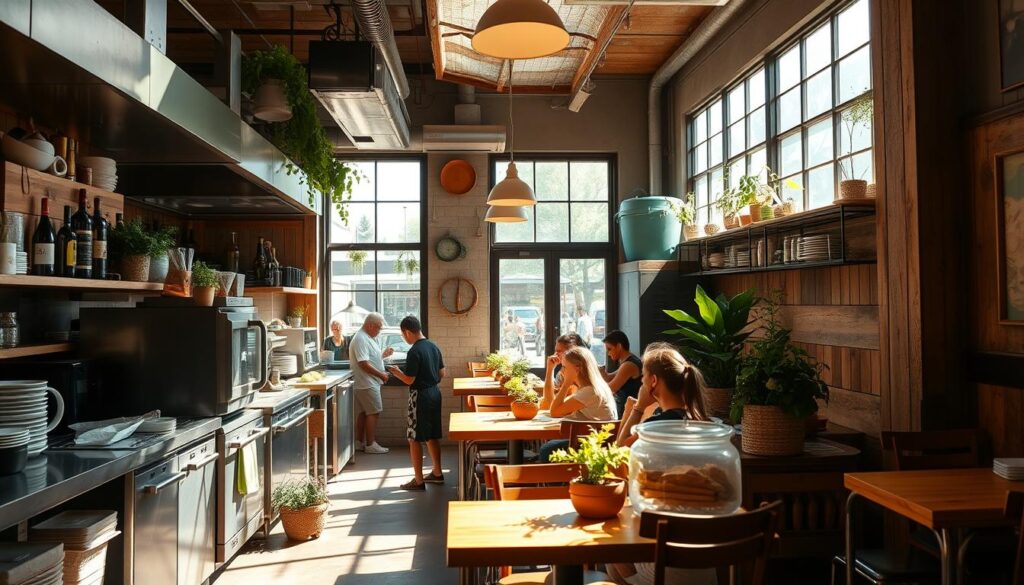
We cook with what nature gives us, like Restaurant De Kas in Amsterdam. This way, our kitchen is a seasonal feast. Ingredients lead the menu, not the other way around.
Our waste reduction is impressive. We use:
- Root-to-stem cooking
- Composting that works
- Creative preservation
- Energy-saving kitchen systems
Studies show that green restaurants are better for the planet and taste. We’ve taken this to heart, working with local suppliers.
| Practice | Environmental Impact | Flavor Benefit | Local Community Effect |
|---|---|---|---|
| Zero-kilometer sourcing | Reduces carbon emissions by 85% | Ingredients at peak freshness | Supports regional farmers |
| Seasonal menu rotation | Decreases water usage by 40% | Natural flavor optimization | Creates seasonal employment |
| Waste transformation | Diverts 95% from landfills | Develops innovative techniques | Provides compost to local farms |
| Energy-efficient systems | Cuts energy consumption by 60% | Preserves delicate flavors | Sets industry standards |
We do more than just cook. We help local projects because saving the planet is tasty. The Green MICHELIN star reminds us that great food doesn’t harm the Earth.
Our menus change with the seasons. This keeps our chefs and guests excited. It’s not just marketing; it’s how we survive and thrive.
Chef Insights
What makes a cook different from a culinary artist? It’s seeing ingredients as characters in a story, not just parts of a recipe.
Executive Chef Jens P. Smith runs his kitchen like a museum curator. He treats each vegetable, meat, and herb with great care. At our museum, you can taste the masterpieces.
Pastry Chef Randall Watson works in a special lab. Here, apples and caramel turn into doughnuts that change how you see dessert. His creations make you question why other pastries exist.
Wine Curator James Krajewski pairs wines with dishes like a matchmaker. His choices enhance flavors, adding missing chapters to the story on your plate.
These chefs aren’t just following recipes. They’re flavor architects who believe great ingredients deserve brilliant technique. They take classic dishes and add modern twists, making them feel fresh and exciting.
Their secret? Let ingredients lead the way, not just follow a set plan. It’s like jazz with seasonal produce as the melody and technique as the rhythm.
Gallery
Welcome to our visual manifesto – where farm-to-table becomes see-to-believe. Our gallery isn’t just decoration; it’s culinary journalism through images.
Imagine Restaurant De Kas in Amsterdam, but with New Mexico sun instead of rain. Our 1927 glass greenhouse turns ingredients into stars with amazing stories.
Every photo is like edible anthropology. Those heirloom tomatoes were in real soil yesterday. The microgreens show off their vibrant colors, beating out store-bought greens.
This place, a sustainable nursery-turned-restaurant, shows how environment shapes our experience. The same visuals that wow in our seasonal features now shine in their own story.
Think of this gallery as the start of your meal – where ingredient portraits meet culinary hints. The story unfolds at your table.