
Writing a menu is more than just listing dishes. It’s like building a culinary masterpiece with calories. I’ve seen chefs work on their menu like writers plan their stories.
In Italy, menus are like family albums. Each dish has a story from their past. That truffle pasta isn’t just pasta – it’s a secret recipe from Nonna’s time in Italy.
Wine pairings are like emotional support drinks. I’ve seen pairings so perfect, they feel like a marriage.
This is like a culinary show where the menu is the program. The cheese course is like the show’s highlight, a moment to remember.
Sourcing Inspiration
Ever wonder where culinary magic really happens? It’s not in sterile test kitchens with chrome surfaces. Real inspiration comes from dirt-under-the-fingernails research in places where food isn’t a trend – it’s heritage.
Italian chefs and sommeliers operate like culinary anthropologists with better knives. I’ve trailed them through Tuscan markets at dawn, watching them negotiate for heirloom tomatoes like art dealers at Sotheby’s. The real education happens in nonna’s kitchens and third-generation vineyards.
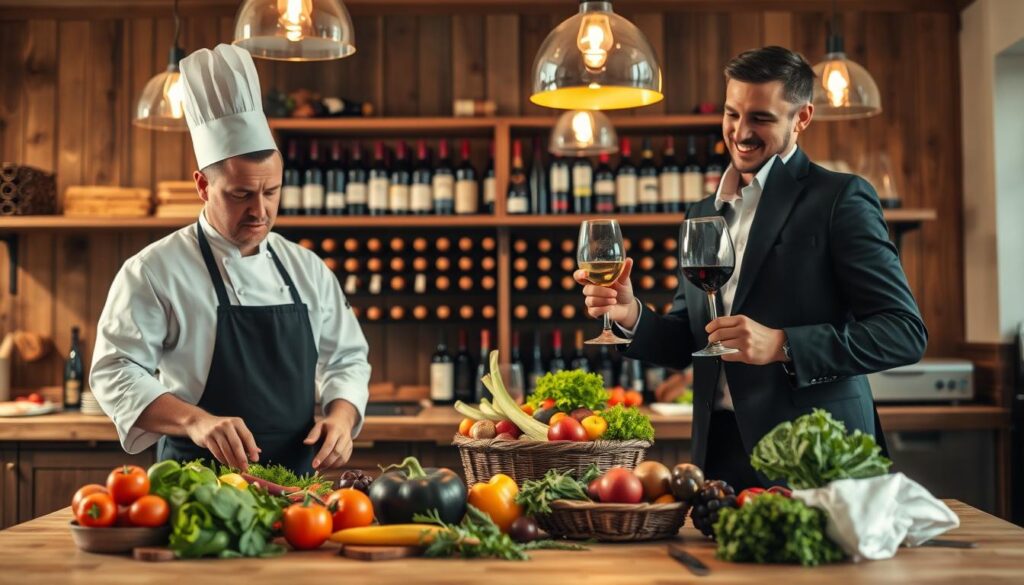
Italy’s culinary landscape offers the ultimate playground for this creative exploration. With its rich heritage and regional diversity, the country becomes a living textbook for food professionals. The devotion to quality ingredients isn’t just philosophy – it’s religion.
The dynamic between an Italian chef and sommelier resembles culinary marriage counseling. The chef demands bold flavors while the sommelier whispers about subtlety and terroir. Their compromise? Experimental pairings that they’ll call “research” while getting pleasantly buzzed.
Their sourcing adventures read like Indiana Jones meets Julia Child:
- Rediscovering ancient recipes in grandmother’s handwritten notebooks
- Rescuing forgotten grape varietals from abandoned vineyards
- Debating olive oil quality with the passion of political pundits
- Journeying through sun-drenched Tuscan hills for Chianti secrets
They explore Sicily’s volcanic soils where ancient vines thrive against rugged terrain. Each region tells a different story through its ingredients. The dirt on their boots contains more culinary wisdom than any Michelin guide.
This isn’t just cooking – it’s cultural archaeology. The best Italian chef and sommelier partnerships understand that inspiration doesn’t come from following trends. It comes from listening to the land and the people who’ve worked it for generations.
Collaborative Tasting Sessions
Every menu story starts with a battle of tastes and pride. Chefs fiercely defend their dishes, while sommeliers give sharp critiques. It’s a mix of passion and precision.
These sessions are like intense culinary speed dating. Chefs and sommeliers mix ingredients and wines in bold ways. The question is, will they work together or clash?
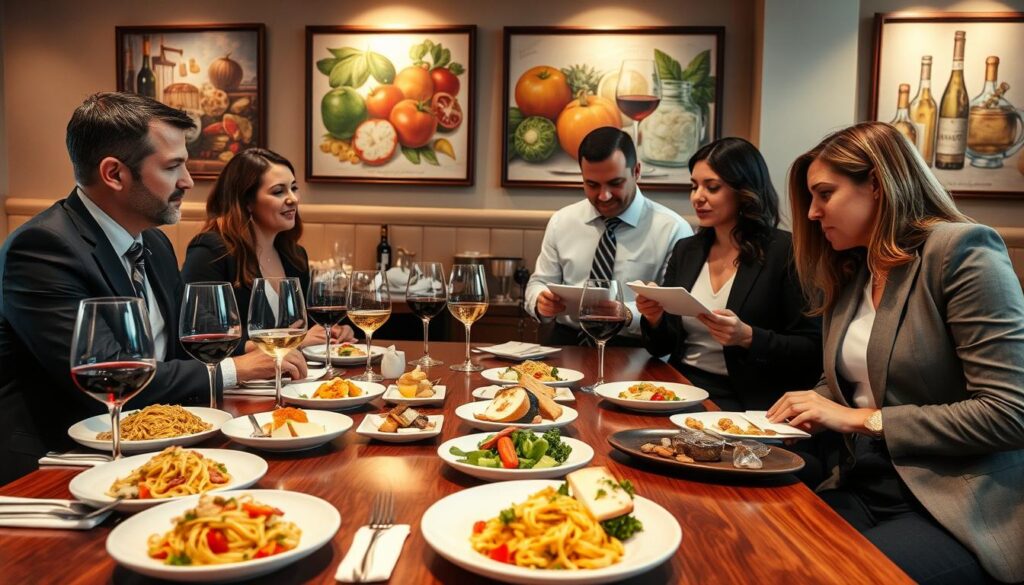
Restaurants get special wine tastings and experiences through partnerships. Rimessa Roscioli in Rome is a perfect example. Their blend of food and wine came from endless tastings and debates.
The best tastings are like jazz improvisation. Someone starts, then another adds something new. Suddenly, you have a dish that’s unforgettable. These moments create the most exciting menu stories.
When a pairing clicks, it’s magical. The tension disappears, and everyone knows they’ve created something special. That’s how amazing menu stories are made – through teamwork and culinary magic.
Customer Feedback Loops
In fine dining, customer feedback is not just collected. It’s understood deeply. Servers act like behavioral linguists, turning small signs into important clues. A slight sigh after the first sip? That could mean a Michelin star is coming.
The Italian way of handling feedback is like family therapy. Criticism is mixed into the recipe like parmesan in risotto. It’s there but doesn’t overwhelm. I saw a Roman chef turn a carbonara complaint into a chance to create something new together with the customer.
Today, feedback is seen as continuous culinary storytelling. Every diner helps write the restaurant’s story. Their likes, dislikes, and special needs guide the menu’s next chapter.
We follow this idea too. We make personalized experiences based on what each guest likes. Special diets are seen as challenges, leading to new, exciting dishes.
Feedback turns into anticipation when done right. I’ve seen sommeliers remember a guest’s favorite wine from years ago. They have it ready for their next visit. That’s not just memory; it’s culinary telepathy.
| Feedback Type | Traditional Approach | Storytelling Approach | Impact on Menu |
|---|---|---|---|
| Dietary Restrictions | Accommodation | Creative Inspiration | New vegetarian tasting menu |
| Wine Preferences | Inventory management | Relationship building | Personalized pairings |
| Course Reactions | Rating system | Narrative development | Revised flavor progression |
| Service Timing | Efficiency metrics | Pacing refinement | Enhanced experience flow |
The best feedback loops create a cycle of improvement. Each guest’s feedback helps shape the next person’s experience. It’s culinary storytelling where everyone is part of the show, and every comment helps craft the next chapter.
This way, meals become memorable journeys. The table becomes a stage where personal tastes meet culinary skill. It creates experiences that stay with you long after you leave.
Sharing Heritage & Innovation
Watching an Italian chef mix tradition with new ideas is amazing. It’s like seeing your nonna go viral on TikTok. This blend of old and new is what makes Italian food so special today.
Food and wine are at the heart of Italian culture. But now, this heart beats to both old and new sounds. The sommelier plays a key role in connecting these two worlds.
I’ve seen chefs keep their family’s recipes alive while trying new things. They’re not leaving the past behind; they’re making it their own. It’s like adding new wings to old buildings.
The sommelier’s job is really interesting. They talk about rare grapes and pair them with new takes on old dishes. It’s a mix that surprises and delights.
Meet the winemakers and artisans who keep Italy’s wine traditions alive. They’re not just sticking to old ways; they’re making them new again. They see tradition as a starting point, not a limit.
The best Italian chef and sommelier teams get this balance right. They’re not just keeping food history alive; they’re adding new chapters. It’s a mix of tradition and creativity.
This way of cooking creates meals that respect the past but excite the present. The Italian food world is full of this mix of old and new. And we all get to enjoy it.
Memorable Guest Moments
The perfect meal isn’t just about stars. It’s about the stories that come alive with each bite. I’ve seen proposals during cheese courses and business deals over Brunello. It’s when menu stories become the guest’s own tales.
That Barolo wine isn’t just a drink. It’s the one open when someone decided to start anew in Italy. The truffle pasta is tied to their anniversary. These moments show that great food is more than just a meal. It’s the setting for unforgettable experiences, like those at Whistler Cornucopia.
In Italy, every meal is a celebration. They believe in enjoying life with carbs, wine, and the power of good food. It’s a way to make life’s troubles fade away, if only for a moment.