
When did your spaghetti suddenly need to look like a Kandinsky painting? Now, your osso buco arrives looking more like a MoMA exhibit.
Italian cuisine has changed from nonna’s big portions to “edible installation art.” It’s not just about looks. It’s about telling a story with every basil leaf.
Chefs are now artists, using plates as their canvases. This shift makes dining a full sensory experience. Restaurants like Verde at PAMM show how culinary skill meets artistic vision.
Your risotto might look like a map of Tuscany. But this visual change is more than just for Instagram. It’s a big shift in how we enjoy food and art together.
Plating Techniques
Ever wonder how tortellini seems to float on Parmesan foam? Welcome to culinary magic, where chefs use tweezers like surgeons and squeeze bottles as paintbrushes. Modern Italian plating is like edible architecture, impressing even Frank Gehry.
It all starts with balance – not just flavors, but how things look. Chefs arrange food with care, making each piece important. They use empty space to add value, saying “I’m worth it” quietly.
Adding height and layers turns flat dishes into 3D wonders. Stacked food creates a feast for the eyes and taste buds. Textures like crispy and creamy add to the experience, making it a sensory delight.
Color theory is key for modern italian plating pros. Chefs pick colors that pop but stay in harmony. They use earth tones for stability and brights to highlight key parts.
Modern tools have changed the game. Tweezers place microgreens with precision, and squeeze bottles paint with sauce. Ring molds add a touch of geometry. These techniques turn kitchens into art studios.
These dishes look amazing and taste even better. The visual appeal doesn’t get in the way of flavor. Each piece is thoughtfully placed for the best taste experience.
Modern Italian plating is like telling a story with food. The plate is the canvas, and ingredients are the paint. It’s about making meals memorable and showing that we eat with our eyes first.
Dish Examples
What happens when Michelangelo meets marinara in Italian food presentation? The answer is on plates where old recipes get new looks, like museum art.
Massimo Bottura’s Osteria Francescana is a prime example. His “Oops! I Dropped the Lemon Tart” is not a mistake but a creative twist. The broken pastry turns into a piece of edible art. His deconstructed lasagna looks like a Frank Gehry building, not grandma’s dish.

These dishes are more than just looks. The perfect risotto swirl helps flavors spread evenly. The layers in tiramisu make sure coffee hits your taste buds in the right order.
Even simple dishes get a makeover. Home chefs use artistic plating to turn starters into stories on a plate.
The move from simple to sophisticated follows a pattern:
| Traditional Presentation | Modern Interpretation | Functional Benefit | Visual Impact |
|---|---|---|---|
| Layered lasagna | Deconstructed components | Customizable flavor combinations | Architectural precision |
| Circular risotto | Intentional swirl patterns | Controlled sauce distribution | Abstract artistry |
| Square tiramisu | Geological cross-sections | Sequential flavor release | Structural revelation |
| Family-style antipasti | Compositional arrangements | Individualized tasting experience | Gallery-style presentation |
This isn’t just food – it’s a story told on a plate. Each dish is a performance where every element works together. Color, texture, and flavor all play a part.
The best Italian food presentation mixes new ideas with tradition. Bottura’s tart may be broken, but it’s full of lemon flavor. His lasagna may be deconstructed, but it’s full of classic tastes.
In the end, these dishes show that in Italian cooking, looks and taste go hand in hand. It’s not just about eating; it’s about experiencing art.
The Role of Color
Ever wonder why that saffron risotto looks like a Mediterranean sunset? Chefs are now artists, using colors to tell stories on your plate. Modern Italian plating is all about color psychology, where each color has a meaning.
Warm colors like red and orange make us hungry. That bright tomato sauce is not just tasty; it’s designed to make you crave more. Cool colors, on the other hand, suggest refreshment. It’s why pesto’s green looks “fresh!” and white truffle shavings on risotto feel luxurious.
In modern Italian plating, chefs use ingredients as colors, just like artists. They create dishes that tell stories of different regions. For example, red tomatoes evoke passion, green basil is fresh, and yellow polenta reminds us of Tuscan sunsets.
Beige food is out of style in modern dining. Our brains think brightly colored dishes are more flavorful and healthy. That’s why orange carrot puree tastes sweeter than pale carrots, even if they’re the same.
| Color | Psychological Effect | Italian Ingredient Example | Perceived Flavor Enhancement |
|---|---|---|---|
| Red | Appetite stimulation, passion | San Marzano tomatoes | Richness, intensity |
| Green | Freshness, health | Basil pesto | Vibrancy, herbal notes |
| Yellow/Orange | Warmth, comfort | Saffron risotto | Creaminess, luxury |
| White | Purity, elegance | Mozzarella di bufala | Delicacy, freshness |
Color in modern Italian plating turns dining into a visual story. Chefs use colors to make dishes look great and taste even better. That colorful plate is not just for Instagram; it’s a trick for your taste buds.
When you see a beautifully plated Italian dish, remember it’s more than food. It’s a display of color theory, where every color has a purpose in visual dining.
Chef Interviews
I’ve seen chefs turn risotto into art, making simple ingredients into shows. Their kitchens are stages, and diners are the audience. It’s not just cooking; it’s a show where every dish tells a story.
A Milanese chef said, “I don’t serve food—I serve emotions on porcelain.” He focuses more on arranging greens than cooking. He views each plate as a canvas, with ingredients as colors.
In Florence, a chef calls his work “edible performance art.” He presents dishes with flair, sharing the food’s story. The meal becomes a show where food is the main character.
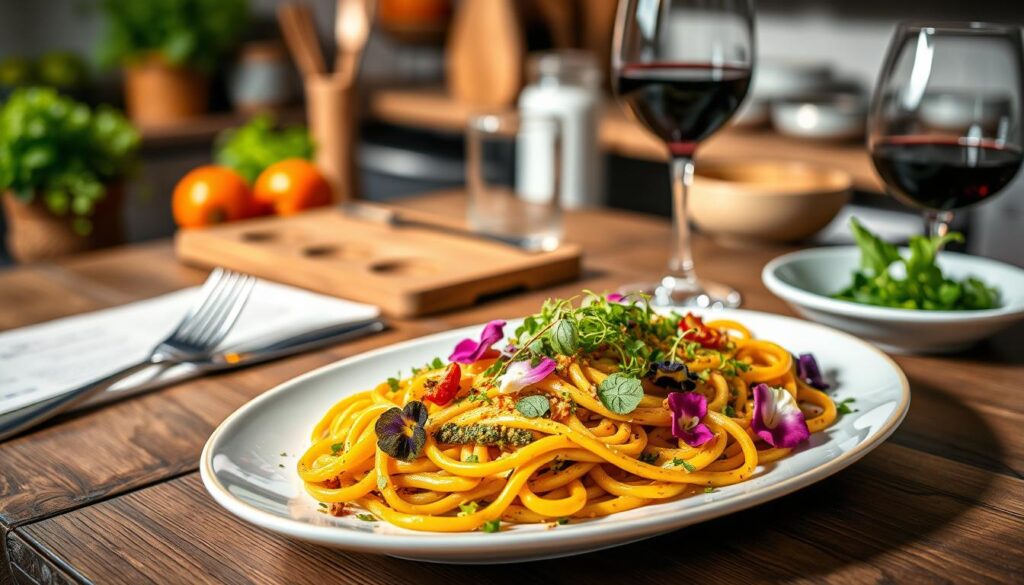
These chefs have changed from feeding people to creating experiences. They feed our imaginations, not just our stomachs. It’s interesting to see them see themselves as directors of food stories.
But does this focus on culinary presentation help or hurt the food? A Neapolitan chef said, “Sometimes the story is more important than the food.” Yet, people keep coming back for the show, not just the food.
The change in Italian food presentation shows a bigger cultural shift. Eating has become a form of entertainment where looks matter more than taste. Chefs now create food symphonies, not just meals.
| Aspect | Traditional Chef | Performance Chef | Customer Impact |
|---|---|---|---|
| Primary Focus | Flavor authenticity | Visual storytelling | Different expectations |
| Time Allocation | 80% cooking, 20% plating | 40% cooking, 60% plating | Longer wait times |
| Customer Interaction | Kitchen presence only | Tableside performances | Enhanced experience |
| Ingredient Selection | Based on taste | Based on color/texture | Visual appeal priority |
| Success Measurement | Empty plates | Instagram posts | Social media validation |
The table shows a big change in what chefs value. Now, they measure success by social media likes, not empty plates. This change in Italian food presentation is both new and maybe too much.
Instagram-Worthy Dishes
In today’s world, your cacio e pepe’s value is in likes, not just taste. We’ve hit a peak where dishes are made for Instagram, not just to eat. This change shows how Italian food has evolved from food to content.
Restaurants now think about how their dishes look on Instagram first. Chefs make food that looks great on small screens, even if it’s hard to eat. This modern Italian plating makes food look amazing but can be tricky to eat.
Eating a tower of pasta can be a mess. We’re all making food into media, documenting it before we eat. The plate is now a stage, and we’re all looking for content.
| Aspect | Traditional Italian Plating | Instagram-Focused Plating |
|---|---|---|
| Primary Consideration | Flavor harmony and texture | Visual contrast and composition |
| Serving Temperature | Optimal eating temperature | Photo-friendly temperature |
| Portion Size | Balanced meal proportions | Dramatic, photo-optimized sizing |
| Garnish Purpose | Flavor enhancement | Color contrast and visual interest |
This focus on looks raises questions about what’s real. Does it matter if your risotto is perfect for photos but not perfect to eat? It seems to depend on how many followers you have.
Even home cooks are getting into this trend. They’re making dishes that look like they were styled for a magazine. We’re all creating content, whether we’re in the kitchen or just have a good camera.
The way we plate food today shows how our relationship with food has changed. We look at food first, then take pictures, and then eat it. It’s a unique time that shows how much we value social media.
Pairings that Complete the Experience
The perfect italian food presentation loses its magic under harsh lights and generic tunes. Context sculpts taste.
Modern Italian restaurants craft entire sensory worlds. They use lighting like Caravaggio used shadow—dramatic, focused, intimate. Music isn’t background noise. It’s part of the recipe.
This is neurogastronomy in action. Your brain believes the pasta tastes richer when the room feels right. The best spots treat dining as total theater.
Every detail—from handmade ceramics to curated playlists—builds a narrative. The plate is just the opening act.
Italian food presentation extends beyond the dish. It’s an atmosphere. A story. A complete sensory journey that makes every bite feel extraordinary.