
Let’s be honest – we’ve all seen bad wine pairings with pasta. I’ve seen Chianti paired with marinara and Barolo with bolognese. It’s time for a change.
Italian cuisine is diverse, with each region having its own traditions. What grows together goes well together. Tuscan Sangiovese and Chianti Classico didn’t just happen by accident.
This is more than just drinking. It’s about food history and culture. Each region shares its story through wine and food, creating amazing flavor combinations.
As this guide to food and wine shows, the right pairing can elevate a meal. From Tuscany’s vineyards to Piedmont’s hills, there’s a world of flavors to explore.
Common Italian Ingredients
If Italian cuisine were a political party, it would stand on three key points: fresh ingredients, seasonal produce, and family traditions. Wine is more than a drink here; it’s a part of the culinary philosophy.
The main rule in Italy is simple: what grows together, goes together. This isn’t just a romantic idea—it’s based on centuries of evidence.
Let’s look at the main ingredients. Tomatoes add acidity, which matches well with wines like Barbera. Olive oil’s richness is balanced by Montepulciano’s structure.
Garlic is like the outspoken activist in the kitchen. And cheese? Aged Pecorino might argue with Pinot Grigio but pairs well with Brunello.
This isn’t just about taste—it’s science. The compounds in food either clash or complement wine, creating a unique taste experience.
For a deeper look at these food and wine pairings, check out our Italian inspiration food and wine pairing guide. It offers insights into finding the best wine with italian food pairings.
Understanding these basics changes how you pair wine with Italian food. It moves from guesswork to a strategic choice. Your taste buds will appreciate the thoughtful approach.
Red, White, and Sparkling Pairings
Choosing between red, white, and sparkling wines for Italian food is like picking your favorite child. You might have a favorite, but you won’t say it out loud. Let’s dive into this tasty problem with a clear mind.
Sparkling wines aren’t just for parties. Prosecco is like a culinary Swiss Army knife. It cuts through fried appetizers with its bubbles. Think arancini or fried calamari – the bubbles clean your palate between bites.
White wines have a wide range. Pinot Grigio adds a citrusy touch that makes seafood pasta even better. Fiano’s texture is complex and works well with cream sauces.
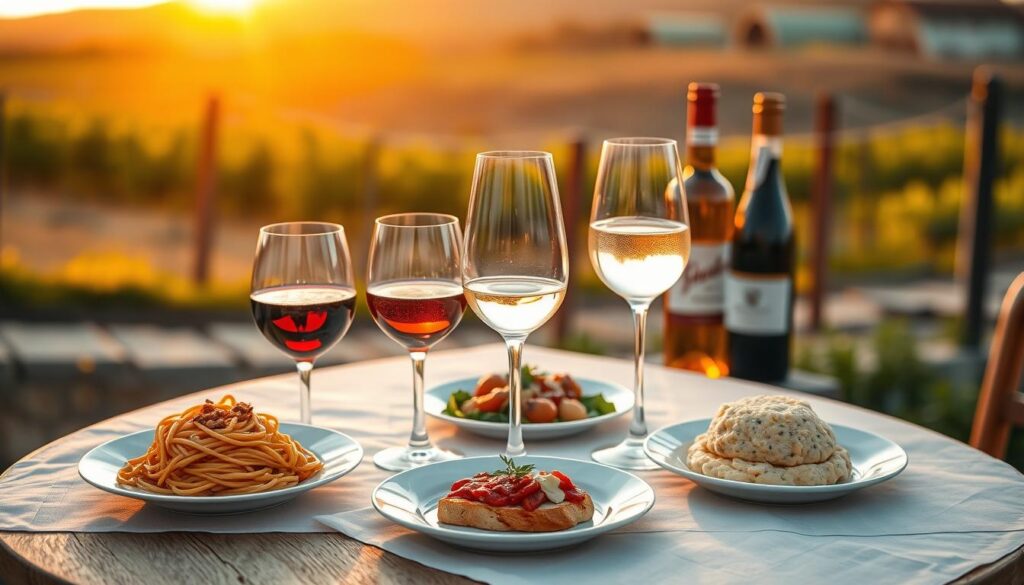
Red wines are the real stars. Sangiovese adds a cherry-acid kiss that’s perfect for tomato-based dishes. Nebbiolo’s tannic structure protects braised meats like a bodyguard.
Consider Dave Mavor’s pairing: pea, mint, and ricotta risotto with light, aromatic whites. The wine’s light touch complements without overpowering.
For medium-weight whites, Nicole Gow loves fresh figs with blue cheese and prosciutto. The wine’s texture matches the salty-sweet mix.
Adam Walls knows how to relax: bocconcini, cherry tomato, and basil pizza with light-to-medium reds. It’s a weekend in a glass and on a plate.
The key is not strict rules. It’s about knowing wine personalities and which foods they pair well with. That’s how you find the best wine with italian food for any event.
Mastering wine pairing italian style means seeing each varietal’s unique qualities. It might be acidity, texture, or pure joy.
Dish-by-Dish Guide
Italian cuisine is like a dating app for dishes and wines. If you pair them wrong, it’s like a bad blind date. Your taste buds and plate won’t get along.
Start with the classics. Pasta dishes like puttanesca or amatriciana need a wine that can handle acidity. Chianti is perfect because it’s acidic and tannic, standing up to tomatoes.
Truffle risotto is a power couple with Barolo. Barolo’s intense flavors of violets and dark plums match the earthy truffle. It’s like pairing two Nobel laureates.
Pizza Margherita isn’t hard to pair. Chianti is versatile, cutting through cheese while respecting tomatoes. It’s a perfect match.
Spaghetti aglio e olio needs a white wine with personality. Vermentino is crisp and enhances the dish without overwhelming it. It’s like the perfect conversationalist.
Antipasti platters are a challenge. You have cured meats, cheeses, and vegetables. Prosecco, made from Glera grapes, cleanses the palate between flavors. It’s like a diplomatic peacekeeper.
Bistecca alla Fiorentina needs a wine with structure. Chianti’s tannins handle the rich beef well. It’s a brilliant choice that feels obvious.
Pairing is about balance, not domination. Wine should complement flavors, not take over your taste buds. It’s like pairing a solo violin with a symphony orchestra.
Great pairing strategy is simple: match wine weight with dish intensity. Light dishes get light wines, and rich dishes get bold ones. It’s culinary common sense with a touch of sophistication.
Regional Nuances
Thinking all Italian wines pair the same way is a big mistake. Italy’s regions have their own unique flavors and tastes. These differences come from the soil, climate, and food traditions of each area.
Tuscany is more than just beautiful views and art. It’s where Sangiovese grapes were made to go well with local dishes. Chianti Classico is perfect with wild boar ragu, it’s a must-try.
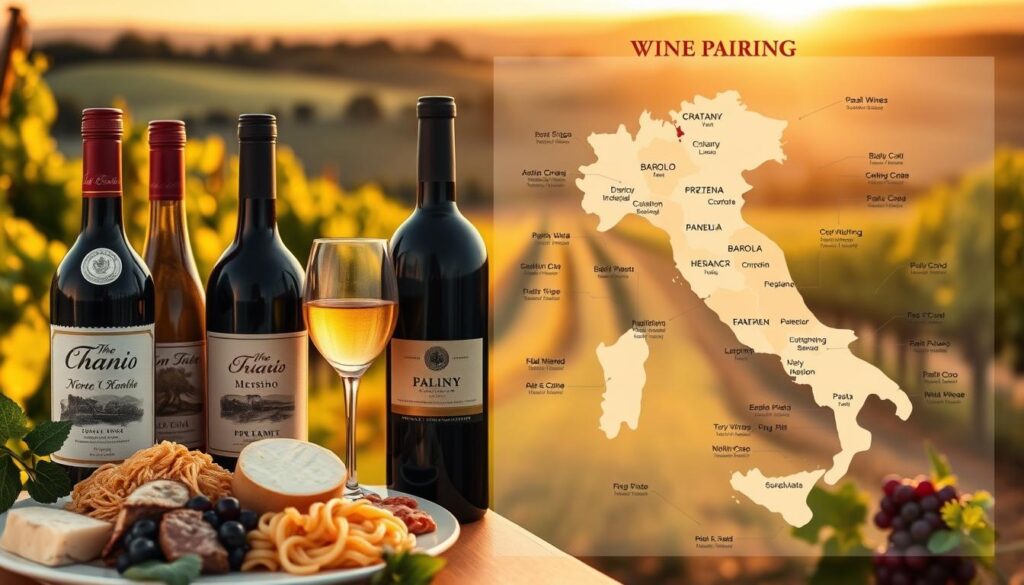
In Piedmont, the wine scene is different. Nebbiolo grapes make Barolo, a wine strong enough for rich dishes. Barbera d’Asti is great with many foods, from risotto to braised meats.
Veneto brings its own star with Amarone della Valpolicella. This wine is so rich, it can even help make peace. It pairs well with hearty meats and aged cheeses.
Italian white wines also have their own stories. Soave from Veneto is perfect with seafood from the Adriatic. Vermentino from Sardinia is great with coastal dishes. Friuli’s mineral whites are perfect with alpine cheeses.
The secret to pairing wine with Italian food is in the local traditions. It’s not about being a wine snob. It’s about understanding how geography affects flavor, making Italian wine pairing complex and exciting.
Pro Tips from Sommeliers
Think of sommeliers as relationship counselors for your palate. They help flavors find common ground. They’ve seen more dinner disasters than a marriage therapist sees midlife crises.
Match intensity like you’re pairing personalities at a dinner party. A delicate Pinot Grigio won’t match a hearty osso buco. It’s like putting a wallflower next to a stand-up comedian – someone’s going to get overwhelmed.
Regional thinking is like not bringing up politics at Thanksgiving. Tuscan wine with Tuscan cuisine is tradition and trial and error. As this comprehensive guide illustrates, what grows together goes together.
Acidity is Italian wine’s secret weapon. Bright, zesty notes cut through olive oil and rich cheeses. It’s the palate cleanser you never knew you needed.
The real pro tip? Experiment like a mad scientist. Sometimes breaking “rules” leads to discovering new pairings. That’s how culinary revolutions start. The best wine pairing italian experiences often come from happy accidents.
Remember: there’s no single best wine with italian food – there’s only what works for your taste buds. Sommeliers aren’t rule enforcers; they’re flavor explorers who’ve mapped the terrain so you can enjoy the journey.
Mistakes to Avoid
I’ve seen wine pairing mistakes that would shock an Italian grandmother. The biggest mistake is treating Italian food as one big dish.
Pairing heavy Barolo with delicate branzino is like using a chainsaw for surgery. It might work, but it’s wrong. Another mistake is ignoring acidity.
Italian wines are bright to match tomato-based dishes. Using low-acid wines with pasta pomodoro is like a knife in a gunfight. Don’t pair sweet wines with salty cheeses.
These aren’t random rules. They come from centuries of trying and learning.
Here are the most common wine pairing italian mistakes I’ve seen:
- Regional blindness – Pairing Sicilian wine with Northern Italian dishes
- Weight mismatch – Heavy wines with light seafood
- Acidity amnesia – Forgetting that tomatoes demand bright wines
- Sweet-salty sabotage – The dessert wine with Parmesan disaster
Finding the best wine with italian food means understanding these basics. It’s not just about following rules. It’s about knowing why some pairings work and others don’t.
| Mistake | Why It Fails | Better Alternative |
|---|---|---|
| Barolo with seafood | Tannins clash with delicate fish flavors | Vermentino or Gavi |
| Sweet wine with salty cheese | Creates conflicting flavor sensations | Dry Prosecco or Franciacorta |
| Heavy red with light pasta | Overpowers delicate sauce flavors | Chianti Classico or Barbera |
| Ignoring regional origins | Misses natural culinary harmonies | Pair wine and food from same region |
Some pairings are so bad, they need their own hall of shame. For the worst pairings, check out these foods that should never be paired with Italian.
Italian wine pairing isn’t about strict rules. It’s about understanding why some pairings work and others don’t. When you respect the chemistry and culture behind these pairings, you elevate your dining experience. You go from just eating to truly understanding Italian cuisine.
Local Wine Spotlights
Italy’s wine scene is like a greatest hits album, where every track is a hit. These wines are more than just bottles. They are cultural ambassadors that turn wine pairing with Italian food into an art form.
Chianti, the Sangiovese superstar, offers bright cherry notes with earthy undertones. Its medium tannins and acidity cut through tomato sauces like a culinary scalpel. It’s the perfect wine for classic pasta pomodoro.
Barolo, Nebbiolo’s magnum opus, is powerful, structured, and tannic. It has rose and tar notes that transform truffle dishes into a religious experience. Amarone della Valpolicella brings the Corvina grape’s lush, velvety texture with dried fruit and spice notes. It makes even the driest chicken parm sing.
Prosecco’s light, bubbly crispness isn’t just for celebrations. Those bubbles work as palate scrubbers between rich courses. Gavi offers Cortese’s crisp, mineral-driven profile with citrus and floral notes. It pairs beautifully with seafood and casual conversation.
These wines tell Italy’s story in every glass. They are not just beverages but cultural artifacts. They have perfected the art of wine pairing with Italian cuisine over centuries. Finding the best wine with Italian food means understanding these regional champions. Let them elevate every bite.