
Local sourcing dining has moved from a feel-good phrase to a practical part of how many diners judge a meal before they book. For Montclair readers who care about where food comes from, the latest national restaurant data gives the conversation firmer shape: guests say local ingredients matter, operators are weighing them against food costs, and menus are being asked to tell a clearer story.
The shift is not simple, and it is not the same for every restaurant. A neighborhood dining room, a special-occasion restaurant, a fast-casual counter, and an in-home chef service may all use local sourcing differently. What matters for diners is asking fair questions, reading menu language closely, and understanding that “local” can refer to farms, fisheries, bakeries, beverage producers, specialty makers, or regional distributors depending on the business model.
Why Local Sourcing Dining Is Getting Practical
Local Sourcing Dining Starts With Demand
The clearest signal comes from diner interest. The National Restaurant Association’s 2025 State of the Restaurant Industry report found that 64% of U.S. adults said the availability of locally sourced food was important when choosing a table-service restaurant; the same report said 41% of adults overall, and 59% of baby boomers, named support for farms and food producers in their community as the top reason according to the 2025 restaurant report. That tells us the appeal of local sourcing dining is not only about flavor or novelty. For many guests, it is tied to community spending and a sense of connection to nearby producers.
For Montclair, that matters because dining choices are often social choices. Residents compare where to meet friends, where to take visiting family, and which restaurants feel aligned with the way they like to eat. Still, national percentages do not prove that every local guest weighs sourcing the same way. A diner planning a quick weeknight meal may prioritize speed and price, while someone booking a birthday dinner may be more willing to ask where the produce, bread, cheese, or beverages are coming from.
Food Costs Shape Buying Choices
Restaurants have been making these decisions under pressure. The same 2025 industry report noted that, among full-service operators who saw food-cost increases in 2024, about 16% said they would purchase more items from local sources to address those higher costs. That number is useful because it keeps the discussion grounded. Local sourcing is not always presented as a luxury move; for some operators, it may be part of a cost, reliability, or availability strategy.
That does not mean local goods are automatically cheaper, easier, or available in every season. It means local sourcing dining now sits inside the daily math of running a restaurant: menu planning, supplier relationships, delivery timing, portion costs, and guest expectations. If a restaurant changes a salad based on seasonal produce or swaps a beverage feature because a nearby maker has limited supply, that can be a sign of real sourcing work rather than inconsistency. The key is communication, especially before a diner commits to a reservation or special meal.
What Diners Should Ask Before Booking
Questions That Keep Expectations Clear
A good sourcing question should be specific enough to invite a real answer but not so rigid that it turns dinner into an audit. Diners can ask about categories rather than demanding a full supplier list. For example, it is reasonable to ask whether a restaurant regularly works with regional farms, whether its baked goods are made in-house or sourced nearby, or whether local beverages appear on the menu. For personal-chef services or catered meals, the same approach can help clarify shopping, substitutions, and seasonal limits.
- Ask which menu items most often use local or regional ingredients.
- Ask whether local sourcing changes by season or by availability.
- Ask how the restaurant handles substitutions when a local product is unavailable.
- Ask whether beverages, desserts, bread, or pantry items are part of the sourcing plan.
- Ask if special events or private meals can be planned around regional producers.
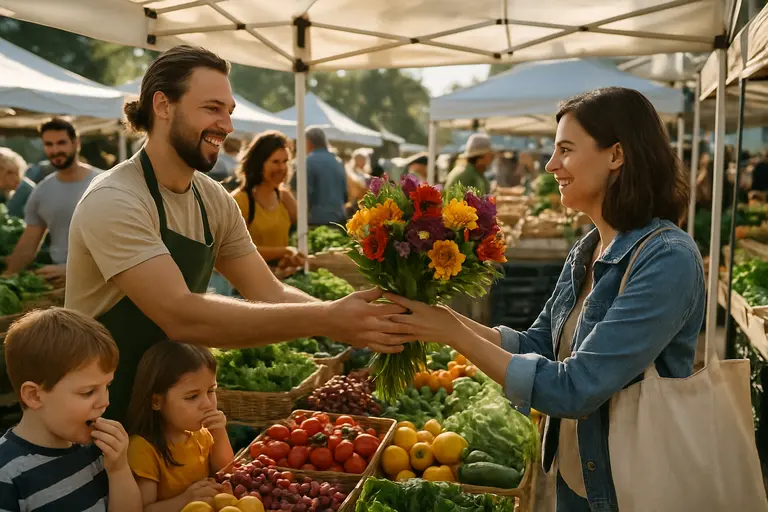
These questions are especially helpful because “local” can be used in broad ways. A tomato from a nearby farm, pasta from a regional maker, cider from a state producer, and greens purchased through a food hub may all be described differently. The USDA’s Local Food Marketing Practices Survey tracks locally or regionally produced foods marketed through channels that include restaurants, food hubs, and institutions as described by USDA NASS. That broader view helps explain why restaurant sourcing is not limited to a chef shaking hands with one farmer at a market, even though that image is appealing.
How To Read Menu Language
Menu wording can be a useful clue, but it should not be treated as proof beyond what is stated. “Seasonal” does not always mean local. “Regional” may cover a wider area than a guest expects. A named farm or producer is more specific, but even then, it may apply to one ingredient rather than the whole dish. Careful reading helps diners reward clear communication without assuming details that were never promised.
This is where sourcing transparency becomes practical rather than fussy. A related Denovo Montclair piece on sourcing transparency raises the same useful point: diners and chefs build trust when expectations are stated early. If you are booking for someone with strong preferences around local goods, ask before arrival. If you are hiring a chef for an in-home dinner, ask whether shopping is based on a set menu, seasonal market availability, or a flexible budget.
There is also a comfort factor here. A restaurant that says, “We use local produce when available,” may be giving a more honest answer than one that uses broad language without detail. For another neighborhood-minded dining read in the same local network, consider a look at Hudson Street Cafe, which keeps the focus close to home.
Montclair Takeaways For Local Sourcing Dining
A Community-Minded Way To Order
For Montclair diners, local sourcing dining works best as a conversation starter, not a purity test. If supporting nearby producers matters to you, ask about dishes where the restaurant is most confident in its sourcing. If price is the bigger concern, look for menus that explain seasonal specials, prix fixe choices, or limited features clearly. If variety matters, recognize that true seasonal sourcing can bring change from one visit to the next.
The recent data points all in the same direction: guests care, restaurants are responding in different ways, and public agencies are tracking local food channels beyond direct farm sales. What remains uncertain is how each individual restaurant applies those ideas on any given week. That uncertainty is not a problem if diners ask clear questions and businesses answer plainly.
Local sourcing dining can make a meal feel more connected to place, but its real value shows up in the details: a server who can explain a seasonal substitution, a chef who builds a menu around available ingredients, or a booking conversation that sets expectations before anyone sits down. In a town that loves a good dinner plan, that kind of clarity may be just as satisfying as the first bite.