

For Montclair diners, specialty food trends are most useful when they answer a practical question: what will feel different at the table? On January 12, 2026, the Specialty Food Association named “SenseMaxxing” its Trend of the Year, describing a push toward heightened sensory intensity through bold flavors, striking textures, and vivid visual cues as consumers seek more immersive experiences amid digital fatigue, according to the Specialty Food Association announcement. For anyone booking dinner, scanning a menu, or hiring a chef for a private meal, that trend is less about novelty for novelty’s sake and more about how a meal feels from the first bite to the last sip.
The same report named five related 2026 trends: Rooted Rituals, Honest Processing, The Appetite Reset, Shelf-Stable Chic, and The Promiscuous Palate. Taken together, they suggest that diners are rewarding food experiences that feel expressive, transparent, culturally grounded, and flexible. That does not mean every restaurant needs neon-colored sauces or theatrical service. In a town like Montclair, where dinner often doubles as a neighborhood gathering, the more relevant question is whether a kitchen can make familiar food feel more alive without losing clarity or warmth.
How Specialty Food Trends Change The Table
Specialty Food Trends Start With Sensory Impact
SenseMaxxing is easy to misunderstand. It is not simply “louder” food. The strongest version of the idea gives diners contrast: crisp against creamy, heat against acid, color against a neutral plate, aroma before the first forkful. A chef can express this through a crunchy garnish, a sharper pickle, a deeply roasted condiment, or a dessert that balances cold, warm, soft, and brittle in a few bites.
For diners, that means menus may ask for a little more attention. A dish might be built around texture as much as flavor. A drink may carry a stronger aroma or a more surprising finish. If you are booking a table for a group, this can be a plus, especially when shared plates let everyone compare impressions. If someone at the table prefers quieter flavors, it is worth asking a server which dishes are boldest and which are more restrained.
What To Ask Before Ordering
The practical side of specialty food trends is simple: ask better questions. Instead of asking only whether something is spicy, ask where the intensity comes from. Is it chile heat, fermented tang, bitterness, smoke, crunch, or aroma? Those differences matter. A diner who avoids heavy spice may still enjoy a high-impact dish built around citrus, herbs, or toasted grains.
This is also where hospitality matters. A good server should be able to explain whether a dish is adventurous in flavor, texture, presentation, or portion size. Diners do not need a lecture at the table, but clear guidance helps a restaurant turn innovation into pleasure rather than guesswork.
Rooted Rituals And The Return Of Meaning
Ritual Is Not Just Nostalgia
Rooted Rituals points toward foods and drinks tied to custom, repetition, and cultural memory. For diners, that could show up as ceremonial service, revived family-style dishes, specific preparation methods, or beverages that carry a sense of occasion. The key distinction is respect. A ritual-driven dish should not feel like a costume. It should give context, either through menu language, staff explanation, or the way the dish is served.
In Montclair, where residents often bring different family food traditions to the same block, this trend has real community appeal. It gives restaurants a way to present food as a shared act rather than a quick transaction. That said, diners should be cautious about assuming that every heritage reference signals depth. A menu can name a tradition without fully honoring it. The best experiences tend to show restraint, care, and a clear reason for why the dish belongs on that menu.
Shared Meals Still Matter
Rooted Rituals also reinforces the value of shared tables. A platter passed between friends can carry more emotional weight than a highly styled individual plate. That is not old-fashioned; it is one of the most durable forms of dining culture. Dining venues in the same community network, such as Hudson Street Cafe, illustrate how casual meals can foster strong neighborhood connections when the focus is on serving with clarity and generosity.
For private dining or personal-chef events, this trend is worth discussing during planning. Ask whether the chef can build a meal around a ritual that is meaningful to the host, without forcing a theme. A Sunday-style dinner, a tea service, a birthday dessert from a family memory, or a first-course toast can carry the spirit of the trend without turning the evening into a performance.
Honest Processing And Menu Transparency
Clear Ingredients Build Trust
Honest Processing is one of the most practical specialty food trends because it speaks to trust. Diners are not only asking whether a product is “natural” or “functional.” They want to know what is actually in it, how it was made, and why the kitchen chose it. For restaurants, that can mean cleaner menu language, fewer vague claims, and more direct naming of core ingredients.
This does not require a menu to read like a grocery label. It does mean that if a dish is built around honey, dates, broth, grains, fruit, or a fermented element, those ingredients should be easy to identify. Diners with allergies or dietary preferences still need to ask direct questions, but ingredient-forward communication can make the first round of choices less confusing.
Where Hype Can Get In The Way
The danger is that transparency can become its own marketing style. A menu full of claims may still tell diners very little. The better signal is specificity. “House-made” is useful only if staff can explain what is made in house. A simple description of a sauce, stock, preserve, or bread can say more than a row of buzzwords.
For Montclair diners comparing dinner plans, this trend rewards restaurants that sound confident without overselling. If a kitchen is proud of a preparation, it should be able to explain it plainly. That kind of honesty often makes experimental dishes feel less risky.
The Appetite Reset And Smaller Portions
Less Can Still Feel Complete
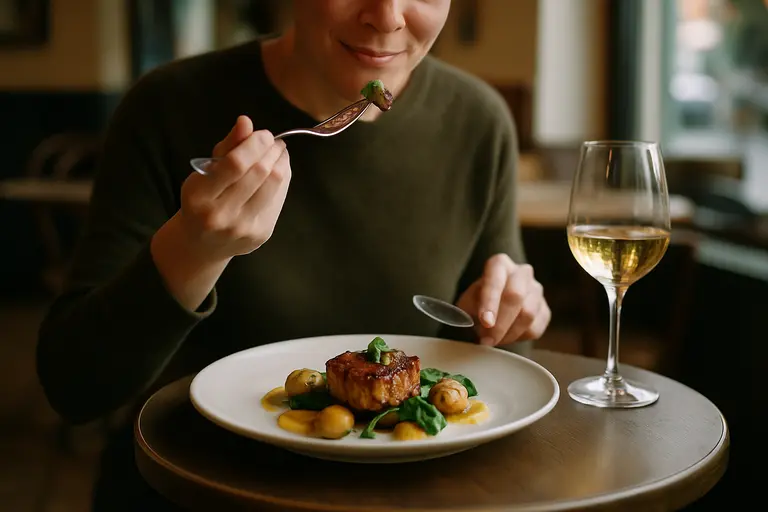
The Appetite Reset suggests that diners are rethinking portion size, pacing, and value. A smaller dish does not have to feel skimpy if it delivers flavor, texture, and satisfaction. This is where SenseMaxxing and portion flexibility overlap. A few bites of something intense can be more memorable than a large plate that repeats the same note for too long.
For restaurants, the challenge is communication. If a dish is snack-sized, tasting-menu sized, or meant to be shared, the menu should make that clear. Diners should not have to decode portion size from price alone. Before booking for a group, ask whether the restaurant recommends ordering in courses, sharing across the table, or choosing individual plates.
- Ask which dishes are best for sharing and which are built as individual portions.
- Ask whether bold flavors are spicy, acidic, bitter, smoky, or texture-driven.
- Ask how many plates the kitchen suggests for your party size.
- Ask whether any ritual-style service or special preparation needs advance notice.
For a related look at comfort-led dining in the 2026 forecast, our piece on global comfort foods pairs well with this discussion. Comfort and innovation are not opposites; many of the most successful new dishes use familiar formats to introduce a sharper flavor or a new texture.
Promiscuous Palate, Shelf-Stable Chic, And Montclair Diners
Flavor Curiosity Meets Everyday Convenience
The Promiscuous Palate is a colorful name for an ordinary habit many diners already know: mixing influences, chasing contrast, and refusing to stay inside one narrow cuisine category. In practice, this can lead to playful pairings, pantry crossovers, and dishes that borrow formats from one tradition while using ingredients from another. The best versions feel thoughtful. The weaker versions feel random.
Shelf-Stable Chic is just as relevant, especially beyond restaurant dining. It points to the renewed appeal of pantry goods that feel designed, giftable, and useful. For diners, that may appear in retail corners, take-home sauces, bottled drinks, preserved snacks, or chef-made condiments. Since the SFA grouped it with broader 2026 innovation, it is fair to expect more crossover between dining rooms, specialty markets, and home entertaining.
How To Read The Signals
As specialty food trends move from trade reports into local dining rooms, diners should separate signal from decoration. A bold plate is not automatically better. A heritage reference is not automatically deeper. A shelf-stable item is not automatically worth buying. The strongest signs are clarity, balance, and a staff that can explain the choice without sounding rehearsed.
Montclair’s dining culture tends to reward places that feel personal and welcoming. That matters here. The trends most likely to last are the ones that make a meal easier to remember and easier to talk about afterward. A sharper crunch, a ritual at the table, a clear ingredient story, or a smaller plate with real flavor can all work if they serve the guest rather than the trend.
Specialty Food Trends For Montclair Tables
The most useful way to read the SFA’s 2026 report is as a set of questions, not a checklist. Does the dish wake up the senses? Does it carry a story without overexplaining itself? Are the ingredients clear? Does the portion fit the moment? Does the restaurant help diners understand what they are ordering?
For local diners, specialty food trends should make booking decisions sharper. Choose restaurants that can explain their boldest dishes, respect cultural references, and offer enough flexibility for different appetites at the same table. Culinary innovation is at its best when it makes dinner feel more connected, more expressive, and more satisfying without asking guests to work too hard for the pleasure.