

Ever wonder why some restaurant specials feel like scoring concert tickets to a secret show? That’s the magic of scarcity meeting desire. It’s culinary FOMO at its finest.
What turns ordinary dishes into must-have experiences? It’s not just about ingredients. It’s about creating that “get it before it’s gone” urgency.
This urgency turns casual diners into devoted fans. It’s about making every bite feel precious. Ingredient stories make you feel like an insider.
Perceived exclusivity turns dinner into a bragging right. This isn’t just food service – it’s culinary psychology. The same principles that make limited-run vinyl pressings collectible apply to your plate.
Let’s break down what makes these special offerings so irresistible.
Planning Process
Creating a limited-edition menu is more than just guessing the next big thing. It’s a mix of knowing when to use seasonal ingredients and timing it right with cultural events. It’s a challenge that even Nostradamus would find tough.
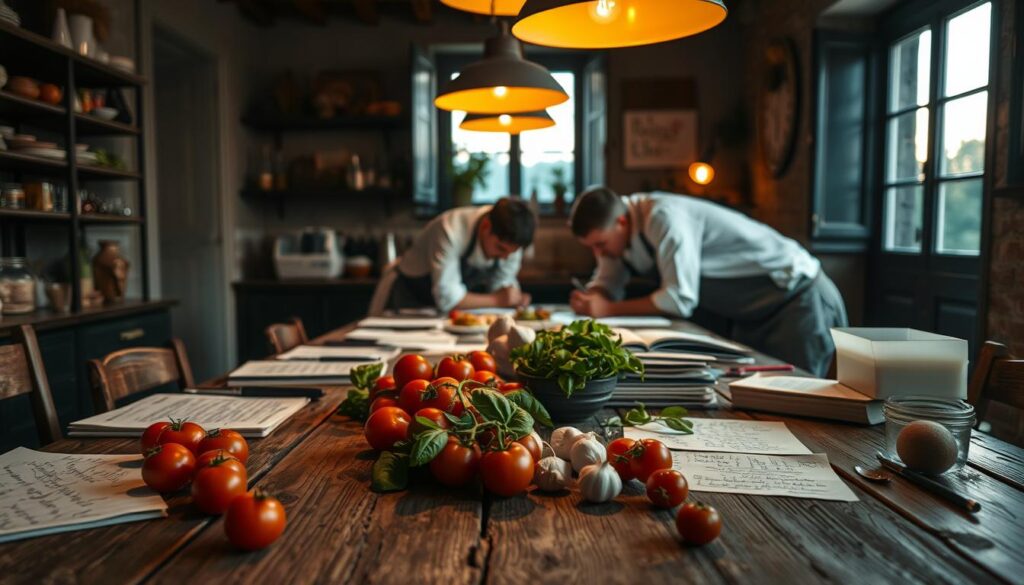
We plan our menus like chess players, thinking ahead six months. The key is to mix creativity with careful planning.
Seasonal Strategy Development
Our seasonal strategy is like a guide that combines food trends with cultural events. We track not just when ingredients are in season, but also when they’re most popular.
For example, should we serve truffles in autumn or save them for Christmas? This choice depends on many factors, including weather, social media, past sales, and cultural events.
- Weather pattern analysis from three different meteorological services
- Social media sentiment tracking for ingredient popularity
- Historical sales data from previous limited editions
- Cultural event calendars (because nobody wants pumpkin ravioli during Easter)
By using a thematic approach, we turn seasonal ingredients into stories. Heirloom tomatoes, for instance, become the stars of our summer menu.
Ingredient Sourcing Timeline
Our ingredient sourcing is as precise as a military operation. We aim to get the best ingredients before anyone else does.
Here’s how we do it:
| Timeline | Action Items | Key Ingredients | Success Metrics |
|---|---|---|---|
| 6 Months Out | Farmer contracts finalized | Heirloom varieties | 95% commitment rate |
| 4 Months Out | Import logistics arranged | Italian truffles | Customs clearance pre-approved |
| 2 Months Out | Quality testing completed | Artisanal cheeses | Batch consistency achieved |
| 2 Weeks Out | Final inventory audit | Fresh herbs | Zero waste target |
This detailed restaurant menu planning process ensures our dishes are made with the best ingredients. Serving anything less than perfect prosciutto is unacceptable.
The outcome? Menus that feel both expected and surprising. It’s like finding the perfect wine pairing that suddenly makes sense.
Chef Collaborations
Our kitchen is like a lab where we mix up tasty experiments. Guest chefs add a spark to our limited menu. It’s about combining cooking styles to create something new.
We choose our partners carefully, not based on fame. We look for chefs who bring new techniques and ideas. This helps us grow and try new things.
Guest Chef Integration
Adding a guest chef is like welcoming a new professor. We have a three-step plan to make it work:
- The culinary audit: We study their cooking style before they arrive
- The culture clash: We have lively debates about cooking methods
- The synthesis: We combine our styles to create something new
When we see our guest as family, the real sharing starts. This is when we learn from each other.
Cross-Kitchen Technique Sharing
This is where we learn from each other. Italian grandmas teach us old pasta-making tricks. Tokyo sushi masters show us sharp knife skills.
This exchange is called “culinary cross-pollination.” Our chefs learn new things, and our guests see their traditions in a new light. It’s a win-win for our limited menu.
These collaborations make our dishes tell stories. They mix culture, innovation, and respect. This makes our menu something to talk about.
Dish Development
Cooking is like theater, and dish development is our dress rehearsal. It’s full of drama, like a Shakespearean tragedy. Here, our special Italian dinners turn into edible poetry, making Dante rethink his career.
Flavor Profile Experimentation
Our flavor lab is like a United Nations security council. We debate over ingredients, like whether 25-year-aged balsamic should rule over white truffle oil. Or if saffron needs help to keep the risotto in balance.
We balance flavors with three key rules:
- The 5-Second Rule: A flavor must register in five seconds to count
- The Echo Effect: Each component should leave a lasting memory
- The Surprise Element: An unexpected note that surprises diners
After trying the same risotto 37 times, we found a secret. Microplaning lemon zest on top creates a “flavor sunrise.” It’s when all flavors come together in perfect harmony.
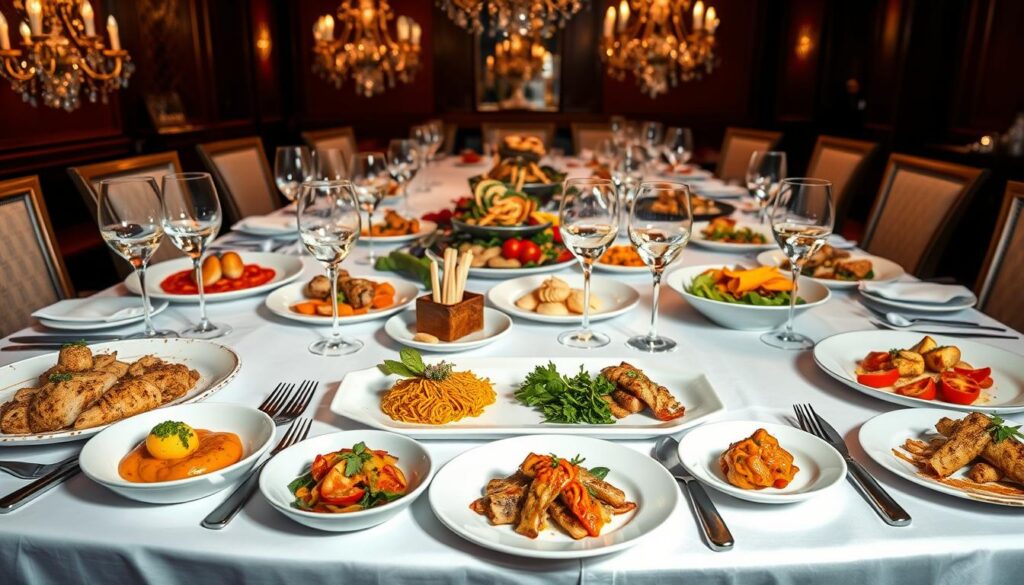
Plating is where our dishes transform. We aim for a look that’s both restaurant-worthy and Instagram-perfect. Imagine Caravaggio as our sous chef.
Our plating evolves in stages:
- The Minimalist Phase: We simplify until the dish almost disappears
- The Architectural Phase: We build components into towering structures
- The Narrative Phase: Plating tells the story of the ingredients
Current menu trends focus on negative space and color. But we go further, treating the plate as a canvas. Our branzino dish looks like a Seurat painting, with herbs and microgreens creating a pointillist effect.
Our breakthrough was seeing plating as culinary choreography. Every element guides the eye through a visual journey. The protein is the main dancer, with accompaniments as the supporting cast.
This focus on visual storytelling makes our special Italian dinners a feast for the senses. The first taste is with the eyes, the second with the camera, and the third with the palate. In today’s world, if a dish isn’t photographed, did it really exist?
Customer Reactions
Watching diners react to our dishes is like live focus groups with better snacks. The data tells a story more compelling than any critic’s review. It’s democracy in action, with every Instagram share and menu selection a vote.
Our limited menu offerings get reactions from enthusiastic to obsessive. Some treat these dishes like rare collectibles. Others evaluate them like wine connoisseurs do a vintage Bordeaux.
Social Media Engagement Metrics
The digital applause meter doesn’t lie. When we launch a new limited menu item, our social analytics spike. Instagram story shares increase by 47% compared to regular menu posts.
Twitter mentions become virtual food courts where customers debate the best dish. The most successful items get what we call “the triple threat”:
- Photo tags with genuine excitement (not just food pics)
- Recipe speculation comments (“How did they get that crust so perfect?”)
- Share-to-save behavior for future reference
Our data shows digital menus drive 29.5% higher sales than printed versions. It’s not just about convenience. It’s about creating shareable moments that extend beyond the dining room.
Repeat Visitor Analysis
Nothing signals success like customers planning their social calendars around our menu rotations. Our repeat visitor analysis reveals fascinating patterns about our limited menu enthusiasts.
These aren’t just casual diners – they’re culinary constituents showing up to vote with their forks. The data shows three distinct patterns of engagement:
| Visitor Type | Visit Frequency | Average Order Value | Social Engagement |
|---|---|---|---|
| The Completest | 3-4 times per limited run | $78.50 | High (posts photos of all dishes) |
| The Strategist | 2 times (beginning and end) | $62.30 | Medium (shares favorite dish only) |
| The Impulse Fan | 1 time (hears about item) | $45.75 | Low (enjoys but doesn’t share) |
This data proves that a strategic limited menu creates dedicated followings. The Completest group alone accounts for 38% of our limited edition revenue.
These customers don’t just enjoy our food – they invest in our culinary narrative. They return not just for the flavors, but for the story we’re telling through our rotating offerings.
The psychological pull of scarcity combined with genuine culinary innovation creates a powerful draw. It’s why some customers can recall our porcini gnocchi from two autumns ago with the clarity most people reserve for major life events.
This isn’t just dining – it’s culinary democracy in action, and the returns are both measurable and delicious.
Visual Gallery
Welcome to the culinary museum where limited editions live forever. This gallery shows the beauty of creation. It goes from flour-dusted counters to the moment fresh pasta meets boiling water in our special Italian dinners.
Behind-the-Scenes Photography
Our cameras catch chefs’ tattoos peeking from their sleeves. They also show the steam from KFC’s Zinger bánh mì. And the magic of making Taco Bell’s Cheesy Street Chalupas.
These photos show the crazy beauty of cooking.
Finished Dish Portfolio
Look at the stunning photos that make you forget about other dinner plans. McDonald’s Chicken Katsu Wrap shines under the lights. Domino’s Cadbury Creme Egg Cookies look almost too good to eat.
Burger King’s Whopperator looks like a meaty skyscraper. These images show we love to look before we eat.
The stories behind limited editions like Popeyes’ Shrimp Tacklebox or these cult favorites turn fast food into art. Our special Italian dinners should be in museums. Each dish tells a story of culinary bravery.