
Ever walk into a restaurant and feel instantly transported? That’s no happy accident. It’s a carefully crafted shared hallucination between the owner and designer, made deliciously real.
Forget interior decorating. Think anthropology. The best restaurant designers start by asking a simple question: “What’s the story we’re selling here?” Is it a mad science hotel with bars inspired by movies? Or a defiant Hamptons dream in a “cursed” Chicago space?
This question is key. It turns a room with tables into a destination. It’s the difference between serving food and creating an experience. As the creative team behind any great venture knows, without this North Star, you’re just building a very expensive set without a script.
Firms like Post Company call it syncing with a client’s “greatest intention.” Others, like ROY Hospitality, start with a dialogue, not a dictate. They come over-prepared but listen first. The vision is everything.
Individual roles and expertise
The world of restaurant design is diverse and complex. It’s not just one person doing everything. Instead, you find a variety of creative teams, each with their own special mix of skills and views.
So, who creates these amazing dining spaces? Let’s explore the different roles.
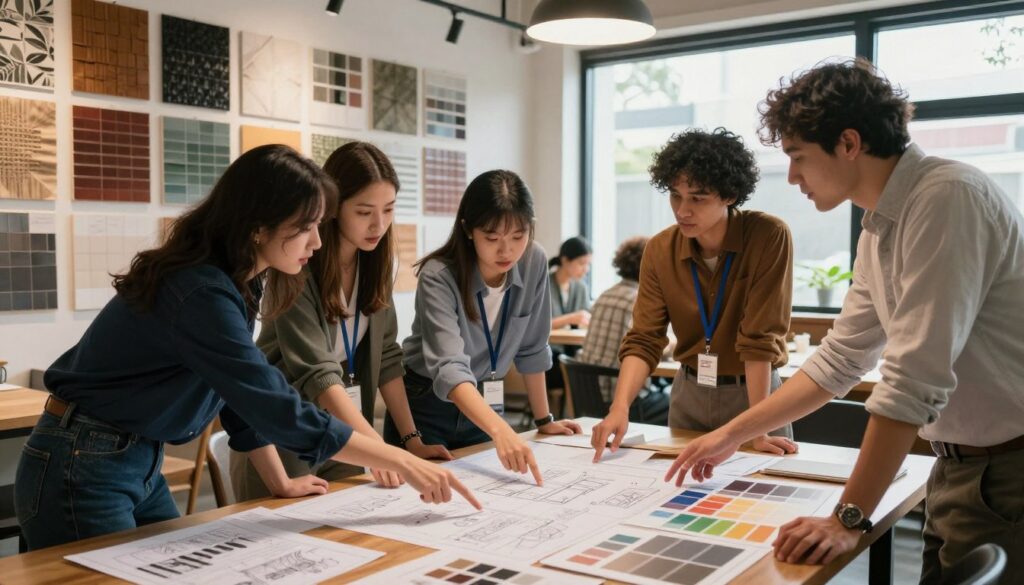
Consider the Post Company, a studio that works together. Ruben Caldwell, Jou-Yie Chou, and Leigh Salem lead this team. They have architects, interior designers, carpenters, and graphic designers. This team works together to create a complete design experience.
Every detail, from the menu font to the lighting, is carefully planned. They focus on every sensory aspect, making sure everything fits together perfectly.
Then, there’s ROY Hospitality, a partnership between sisters Hannah and Emily Collins. Hannah brings creativity, while Emily handles the business side. They call themselves “restaurateurs first,” focusing on building strong relationships with their clients.
Their team of eight women works together, making sure designs work in real-world situations. They test their ideas to ensure they meet their high standards.
Lastly, there’s Brad Parker, a solo designer who does it all himself. He has a deep understanding of design and is driven by his passion. He focuses on creating spaces that reflect his personal vision, without needing a team.
Each approach has its own strengths. Studios offer a wide range of skills. Partnerships bring together different perspectives. Solo designers focus on their personal vision. The right choice depends on the restaurant’s story and goals.
Success comes from understanding how to work well together, whether you have a big team or are working alone. Mastering team dynamics is key.
| Model | Team Structure | Core Expertise | Design Philosophy |
|---|---|---|---|
| The Collaborative Studio (e.g., Post Company) | Multi-disciplinary team (architects, interior designers, carpenters, graphic artists) | Holistic environmental design; every detail is part of a total brand experience. | Cohesive, concept-driven spaces where aesthetics and brand identity are inseparable. |
| The Strategic Partnership (e.g., ROY Hospitality) | Small, integrated team led by partners with complementary skills (creative + operational). | Operationally-informed design; spaces are built for staff efficiency and guest flow. | Pragmatic beauty. Design must serve the business and enhance the human experience. |
| The Solo Visionary (e.g., Brad Parker) | Single restaurateur-designer handling all creative and business facets. | Curated observation and entrepreneurial execution; a highly personal point of view. | Author-driven. The space is a direct, unfiltered expression of the founder’s vision. |
The future of dining looks exciting. Restaurant design is becoming more diverse. Great design can come from a team, a group of craftspeople, or even one person with a dream. It’s not just about drawing plans. It’s about understanding the life and joy that will fill the space.
Design challenges and solutions
The true test of a creative team is in the messy middle. This is where blueprints meet brick walls. Here, constraints become collaborators and problems transform into personality.
Consider Tsukimi, a 12-seat temple to kaiseki dining. The challenge was how to balance personal space with communal experience. The solution was architectural poetry—two central bars running down the room, each seat framed in wood like a personal portrait.

Every bowl’s storage was mapped with obsessive precision. Intimacy wasn’t hoped for; it was engineered. The creative team turned limitation into the restaurant’s defining feature.
The Cinematic Scale Challenge
Now flip to the opposite extreme: the Lafayette Hotel’s seven distinct venues under one roof. The challenge here wasn’t scarcity but abundance—how to create seven unique personalities without descending into thematic schizophrenia.
Post Company’s solution was a film buff’s dream. They weaponized cultural references with surgical precision. A Top Gun-inspired bar here, a diner curated with historical consultation there. Each space got its own narrative arc.
The creative team approached the project like directors crafting a cinematic universe. Every venue became a character with its own backstory and aesthetic language.
Psychological and Economic Puzzles
For firms like ROY, challenges often live in the psychological realm. How do you avoid designing a space that, as Hannah Collins puts it, “sucks energy” from everyone who enters? Her solution is material alchemy.
She bans large panels of dead black. Instead, she focuses on raw materials that feel alive—textured brick, honest concrete, wood with grain you can feel. The space breathes.
Then there’s the economic puzzle. At Magnolia Brewing, the question was how to make waiting for a table profitable. The creative team added a lounge area with bleacher seating—a revenue-generating holding pen that guests actually enjoy.
How do you make a cubano at a counter feel like a night out? You wrap it in a beautiful space. Function funds form, and vice versa.
Exorcising Bad Juju
Perhaps the ultimate challenge: a location’s cursed reputation. Brad Parker faced this with The Hampton Social, a space with what he calls “bad juju” from previous failed concepts.
His solution wasn’t just redesign but complete reinvention. He created a lifestyle experience—a perpetual vacation vibe for landlocked Chicagoans. Wicker, nautical touches, and breezy aesthetics became weapons against the curse.
The creative team didn’t just design a restaurant; they designed an antidote. They understood that sometimes the solution must be psychological before it can be physical.
What connects these disparate challenges? A strategic approach that mirrors the five stages of design thinking. Empathize with the space’s constraints. Define the real problem (it’s rarely what it seems). Ideate beyond obvious solutions.
Then prototype through material choices and test through revenue streams or customer flow. The best creative team operates in this fluid space between art and analytics.
They understand that the solution is never just aesthetic. It’s operational, psychological, and sometimes, when done right, a little bit magical. Constraints become the raw material for character. Problems birth the most memorable features.
That’s where mere decoration ends and real design begins.
Translating vision into reality
So how does a sketch become a sensation? For top restaurant designers, it’s just the beginning. The real magic happens in plaster, fabric, and light.
Post Company is all about creating worlds. They design spaces where every detail tells a story. This turns a simple mood board into a place you can sit and feel.
ROY is known for blending beauty with practicality. Their team makes sure every design works well, even on busy nights. They make sure a vision is real when it’s put to the test.
Brad Parker’s story is one of determination. He built The Hampton Social with his own vision. No committees, just his passion. This shows how a personal dream can become a place for everyone.
When these approaches meet, something special happens. It’s not just a place to see. It’s a feeling you get. The weight of the cutlery, the glow on a friend’s face, the hum of the room.
Great dining is about connection and skill. It’s why places that celebrate culinary artistry touch our hearts. The right team creates the stage. The designers build the world. We get to enjoy it for a night.