

Forget the decor. Ignore the playlist. The true heartbeat of any great restaurant isn’t something you see or hear. It’s something you feel.
I’m talking about the energy and pacing of service—the invisible conductor of your entire meal. Think of the difference between a frenetic, slapstick Benny Hill chase and a meticulously scored scene from The West Wing. One leaves you breathless and annoyed. The other leaves you feeling expertly guided.
Timing is everything. Serve too fast, and guests feel rushed. Too slow, and boredom sets in. The pros navigate this perfectly, adapting to each table’s rhythm. This choreography transforms a simple meal into an immersive dining journey.
Good pacing is emotional rhythm management. It allows for the quiet absorption of a wine’s notes. It creates space for conversation between courses. It builds anticipation for the next act. When done right, it’s the secret sauce of a memorable dining room experience.
Getting this wrong is the fastest path to a scathing review. Getting it right requires more than intuition. As we’ll explore, modern tools like automated course pacing systems are giving restaurants the data-driven edge to master this delicate ballet.
Music and sound design
The difference between a forgettable meal and a memorable dining room experience often isn’t on the plate—it’s in the airwaves. Think of your restaurant’s soundtrack as its sonic personality. It’s the subconscious layer that whispers to guests before the first bite arrives.
Creating this audio landscape isn’t about playing your personal Spotify favorites. It’s strategic. French jazz for a Parisian bistro creates instant immersion. Upbeat Latin rhythms for a lively taqueria signal a party. Get this wrong, and you create cognitive dissonance. Blasting thrash metal in a fine-dining establishment is a cry for help, not a branding statement.
Volume is the invisible bouncer of your restaurant vibe. Too loud, and conversation becomes a shouting match. Too soft, and the space feels uncomfortably silent, like a library with cutlery. The sweet spot? A level where the music provides texture but doesn’t demand attention. It should be felt, not heard—a concept explored in depth when you turn up the taste and understand music’s secret power.
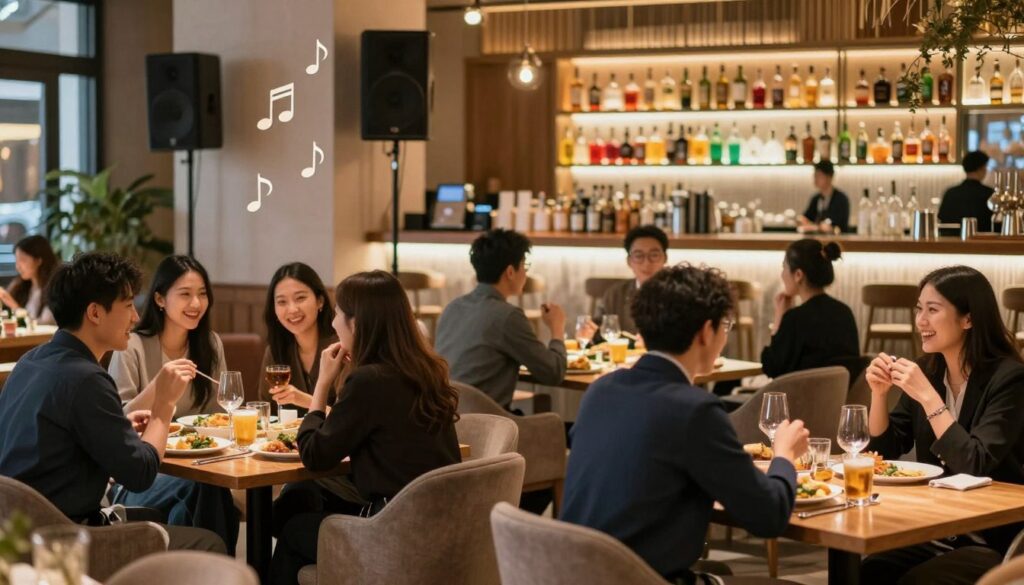
Tempo is equally cunning. A leisurely, three-hour tasting menu needs a different rhythmic companion than a vibrant, share-plate social hour. Fast tempos can subconsciously hurry diners. Slow, melodic tracks encourage lingering. It’s audio engineering for appetite.
Then there are the sounds you don’t control—the Foley effects of a great dining room experience. The satisfying clink of crystal. The sizzle from an open kitchen. The warm murmur of conversation. These organic sounds complete the soundscape. Their absence is deafening.
Here’s the analytical kicker: sound directly alters taste perception. Studies show background music can enhance or diminish flavor. The wrong soundscape can make a beautiful dish taste bland. The right one can elevate simple ingredients. It’s why a cohesive aesthetic, from sound to sight, matters. Consider how modern Italian design principles harmonize visual and sensory elements.
Your playlist is cultural shorthand. It tells a story without a word. A carefully chosen soundtrack builds a complete restaurant vibe that guests feel in their bones. They might not remember the song, but they’ll remember how the space made them feel.
So, yes, I’m judging your top-40 remixes in a farm-to-table concept. Because in the end, you’re not just feeding people. You’re scoring their evening. Every note contributes to the final review they’ll write in their mind—and possibly online.
Staff interaction and movement
Modern restaurant service has changed a lot. It’s now about dynamic interaction, where staff movement sets the pace. Think of servers as the main dancers in a culinary ballet. Their every move is part of a bigger show that guests feel but don’t see.
This leads to a key difference between service and hospitality. Service is transactional—it’s just about delivering food and drinks. Hospitality is relational—it’s about noticing small details and asking if everything is okay. One clears plates, the other clears misunderstandings.
The best service experiences come from genuine “individual face time.” It’s not just scripted words, but real moments of connection. Staff need to be able to read a table’s body language well.
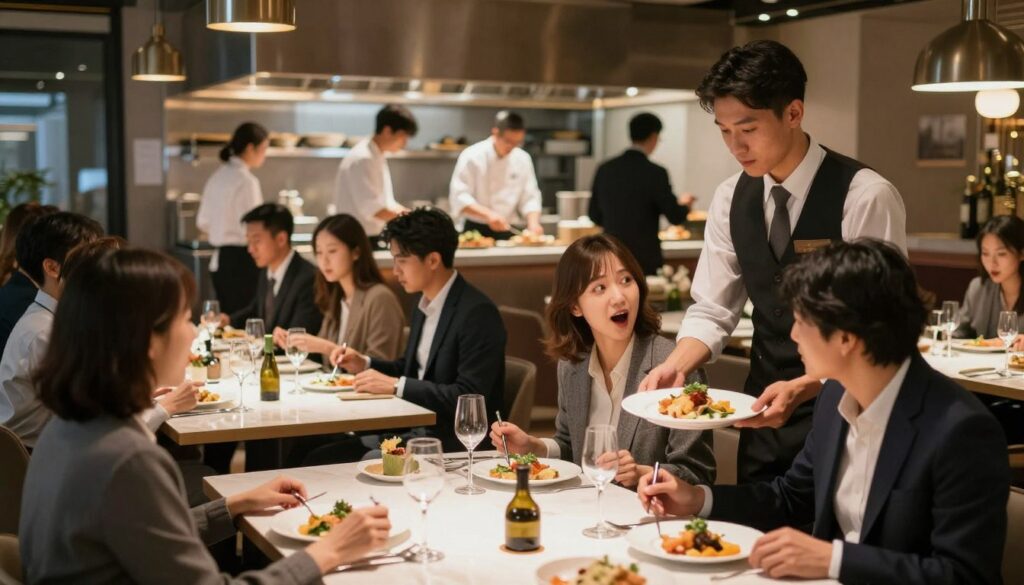
Now, let’s talk about movement. It’s more important than many restaurateurs think. The old, stiff service feels as outdated as a three-martini lunch. Today, successful places have fluid, purposeful motion that makes things run smoother and adds flair.
Consider the comeback of hawker trays and roaming vendors. These mobile serving stations move through crowds like ninjas. They offer several benefits:
- Reduced congestion: No bottlenecks at fixed stations
- Increased interaction: Staff become moving conversation points
- Theatrical spectacle: The service itself becomes entertainment
- Operational efficiency: Multiple tasks done in one pass
This isn’t just about being efficient—it’s about creating an immersive dining experience. When a vendor shows up with sizzling skewers or a steak comes down via zipline, you’re not just serving food. You’re creating memorable moments that guests will talk about.
The art of staff movement is complex. Let’s break down the key elements:
Approach angles matter. Never come up behind a guest—it’s startling. The best approach is a gentle arc from the side, entering their vision before speaking. It’s like the difference between a jump scare and a smooth entrance.
Reading table body language is what separates good servers from great ones. If guests are leaning in, bring energy. If they’re speaking softly, offer quiet service. The staff’s ability to adjust their presence based on these cues is true hospitality in motion.
Seamless hand-offs between staff should be like a smooth relay race. When done right, guests don’t even notice the transition. They just feel like they’re getting uninterrupted attention.
Here’s how different movement styles affect guests:
| Movement Style | Guest Perception | Operational Effect |
|---|---|---|
| Formal, Processional | Stiff, impersonal | Predictable but slow |
| Erratic, Hurried | Chaotic, stressful | Fast but error-prone |
| Fluid, Purposeful | Confident, attentive | Efficient and graceful |
| Interactive, Roaming | Engaging, theatrical | High guest contact |
When staff movement flows well, something magical happens. Needs are anticipated, not just asked for. Water glasses refill by themselves, and plates disappear during quiet moments. It feels like being cared for by intuitive, empathetic ambassadors.
This is the physical side of your restaurant’s theory of mind—the ability to understand what others are thinking and feeling. Are your staff just following a script, or are they skilled improvisers who can adapt in real time?
The answer shows whether you’re just serving food or creating a memorable dining experience. In today’s competitive world, it’s the movement between courses that truly feeds the soul.
Guest engagement moments
Think of your meal as a play. The energy, music, and staff choreography set the stage. The final act? A guest engagement moment that earns a standing ovation. This is where your restaurant vibe becomes a story people tell their friends.
Modern diners don’t just buy food. They buy memories. A static plate is a forgotten email. A tableside ritual is a scene from a favorite film. At Costa in Charleston, the Regiis Ova Ossetra caviar service isn’t just luxury. It’s a chilled gin shot and a story about provenance, transforming consumption into connection.
This shift from passive to participatory defines the current dining room experience. Nisos Prime in Chicago wheels out a prosciutto cart with a hand-powered slicer. Urban Hill in Salt Lake City builds tabletop fire pits for s’mores. These aren’t gimmicks. They’re conversation starters, edible theater that turns a table into a stage.
The most ambitious designs, like House of Yoshin’s members-only whiskey lounge, frame hospitality as exclusive access. As noted in a recent industry analysis, this post-COVID demand for social, interactive dining makes these moments your edible thesis statement. A successful restaurant vibe is built on these peaks.
The magic isn’t in the flame or the cart. It’s in the shared glance, the phone raised for a photo, the “how did they do that?” whispered across the table. That’s the alchemy. You’re not just serving dinner. You’re producing a night people will review with their hearts, not just their words.