
Local Farm Purchases are no longer just a pleasant line on a chalkboard menu. They have become a serious signal about how a restaurant thinks about flavor, identity, cost, and community connection. For diners, that signal can be useful before making a reservation. It can also be easy to misread if the menu gives only broad claims and no detail about how often the kitchen buys from nearby farms.
As a chef and critic, I look at direct farm buying less as a slogan and more as a working system. A restaurant has to receive product, adjust prep lists, accept seasonal limits, and explain changes to guests. The best versions of this practice respect both sides of the table: farmers need workable demand, and diners need honest expectations before they book.
Why Local Farm Purchases Are Gaining Ground
The Trend Has Moved From Specialty Claim To Menu Signal
In November 2025, the National Restaurant Association named local sourcing the top overall trend in its 2026 culinary forecast. That matters because this was not framed as a niche preference for a small group of restaurants. It was presented as a broad dining trend tied to freshness, community ties, and the way restaurants describe value.
Local sourcing has always had appeal, but the current dining climate gives it new weight. Guests are asking sharper questions about origin, not just preparation. A tomato grown nearby in season can carry a different menu meaning than a tomato selected only for year-round availability. That does not make one restaurant better than another by default. It does mean diners are paying attention to the purchase path behind the plate.
The Farm Share Gap Matters
The economic context is just as revealing as the menu language. USDA Economic Research Service estimates show that in 2024, farms received 18.5 cents of every dollar spent on food at home, compared with 7.1 cents of every dollar spent on food away from home, such as restaurants and other dining businesses, according to the agency’s farm share data. That gap helps explain why direct relationships between restaurants and farms attract attention: they may offer farms a more visible place in the food dollar, though each arrangement depends on volume, pricing, labor, and delivery structure.
For a restaurant, direct farm buying can also create a clearer story for the dining room. The story is not useful if it is vague. “Local” can mean many things unless the restaurant names a farm, a growing region, a seasonal product, or a buying schedule. Diners do not need a lecture before dinner, but they deserve enough information to understand whether a sourcing claim is central to the menu or simply decorative.
What Restaurants Gain, And What Still Gets In The Way
Local Farm Purchases And Menu Identity
Local Farm Purchases can give a restaurant a more distinct point of view. A kitchen that buys directly from farms may write menus around harvest windows rather than forcing the same set of dishes through every month. That can lead to smaller menu changes, rotating vegetable sides, fruit desserts that come and go quickly, and specials that depend on what arrived in good condition that day.
This approach suits restaurants that want a close link between cooking and place. It also suits chefs who enjoy restraint. If the best product that week is a crate of greens, tender squash, or orchard fruit, the skill is in building a dish that lets the ingredient speak clearly. That is not a romantic shortcut. It takes planning, trimming, storage discipline, and a dining room team that can explain why a listed garnish or side changed.
For casual operators, the same thinking can show up in simpler ways. A cafe may feature local eggs, seasonal preserves, or nearby greens without rebuilding the full menu every week. Readers interested in how different sites in the same restaurant network approach sourcing might find insights from Hudson Street Cafe, which focuses on everyday dining culture within the same network.
Cost, Scale, And Seasonality
The practical barriers are real. Direct buying can require more communication than ordering through a broadline distributor. Farms may not have the volume a busy restaurant needs every service. Weather can change supply quickly. Delivery schedules may be less convenient. Product size and appearance may vary more than what some kitchens are used to receiving.
Cost also shapes the decision. A restaurant can support nearby farms and still need predictable pricing to keep its menu workable. Diners should not assume every local ingredient automatically means a higher-quality dish, and they should not assume every restaurant without a named farm is careless. Some kitchens use a mix of nearby farms, regional distributors, and national suppliers because that is what keeps service steady.
The strongest dining programs tend to be clear about the mix. They might identify a local vegetable supplier while still relying on standard channels for dry goods, citrus, coffee, or pantry staples. That kind of honesty is more useful than a broad claim that suggests every ingredient came from down the road.
What Diners Should Ask Before Booking
Read The Menu Language Closely
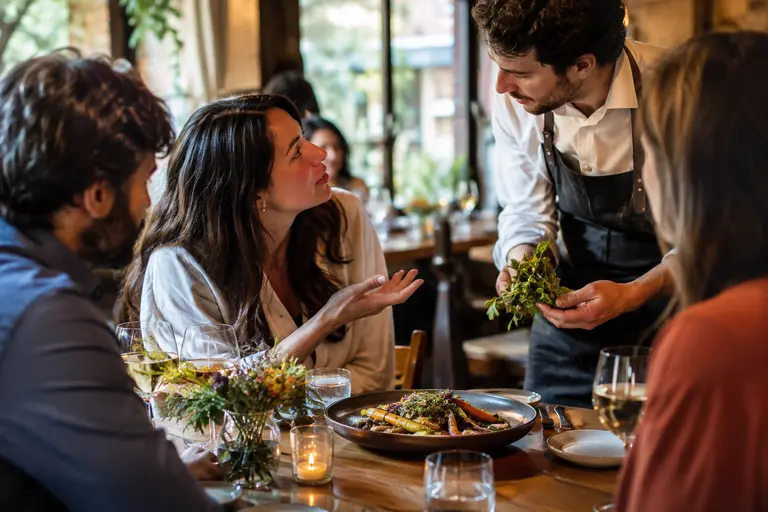
Before booking, diners can look for signs that a restaurant treats sourcing as a working practice rather than a label. Named farms, seasonal notes, rotating dishes, and staff who can describe recent product changes all carry more weight than a single phrase at the bottom of the menu. If the menu says “local produce,” it is fair to ask what is local that week.
That question should not feel adversarial. A good restaurant team will answer within reason, and a busy server may offer a short answer rather than a full sourcing map. The aim is not to audit the kitchen from the table. The aim is to understand whether the restaurant’s claims match the kind of meal you want.
- Ask which dishes depend most on nearby farms.
- Ask whether seasonal items change by week or by month.
- Ask if substitutions are common when farm supply shifts.
- Ask whether a tasting menu or prix fixe format uses more local produce than the regular menu.
Ask About Substitutions Without Treating Them As Failure
Menus tied to farms may change. That is not a flaw if the restaurant communicates it well. If asparagus runs short or berries arrive later than expected, the kitchen may replace a component with another seasonal product. In a direct sourcing model, flexibility is part of the bargain.
This is where diners can protect themselves from disappointment. If you are booking for a birthday, business dinner, or special diet preference, call ahead and ask how fixed the menu is. For a broader set of questions to bring to a dining room conversation, this related piece on local sourcing dining questions gives a useful starting point.
Local Farm Purchases work best when the restaurant explains the limits before the guest feels surprised. A seasonal menu should feel alive, not unstable. That difference comes down to communication.
Local Farm Purchases Before Booking
A Practical Reading Of The Trend
Local Farm Purchases are encouraging a more direct relationship between farms, kitchens, and diners, but the trend is not a cure for every problem in restaurant sourcing. It can support regional producers, bring sharper seasonal character to the plate, and give chefs a clearer point of view. It can also add labor, raise planning pressure, and narrow what a restaurant can promise on any given night.
The most useful approach for diners is balanced curiosity. Look for specifics, expect seasonal limits, and respect restaurants that explain their sourcing with plain language. A menu does not need to name every carrot to be trustworthy, but it should not use farm language as decoration. When a restaurant can say what came from nearby, why it chose that product, and how the dish may change with supply, the sourcing claim becomes part of the meal rather than a marketing line.
For chefs, the pressure is just as clear. Direct farm buying has to taste good first. A local ingredient that is poorly cooked does not earn extra credit. The strongest restaurants will be the ones that pair farm relationships with disciplined prep, fair pricing, and honest service. That is where the current dining trend becomes meaningful at the table.